Open Plan Living Areas for Your Houseboat — Make Small Spaces Feel Huge, Comfortable, and Totally Livable
Attention: dreaming of an airy, sociable houseboat interior that feels larger than it is? Interest: imagine lounging with friends, cooking while chatting, and never feeling boxed in—despite being on the water. Desire: this guide shows you how to create Open Plan Living Areas that balance style, safety, and marine practicality. Action: read on, take notes, and start sketching your plan—your floating home will thank you.
Why Open Plan Works Well on Houseboats
Open Plan Living Areas are more than a design trend; they’re a practical solution for small, moving homes. On a houseboat, every square foot is precious. By removing unnecessary partitions and choosing multifunctional elements, you can achieve a spacious, social, and highly usable interior—without adding extra hull or beam.
When you want to get the most from an open layout, it helps to look at specific examples of flexible layouts you can adapt right away. For practical inspiration and concrete solutions that help you switch a lounge into a dining area or a guest cabin in minutes, check our ideas on Convertible Multiuse Spaces. The guide walks you through convertible benches, fold-down tables, and stow-away beds that keep walkways clear while giving you multiple room functions in one footprint.
If you’re still sketching your concept and want a broader set of possibilities, our collection of Houseboat Design Ideas gathers creative layouts and practical details from real builds. Reading diverse layouts helps you avoid common mistakes, spot clever storage tricks, and see how other builders solved access, light, and circulation—so you can adapt what works best for your beam and lifestyle without reinventing the wheel.
Natural light makes a huge difference in how roomy your Open Plan Living Areas feel. For straightforward methods to bring more daylight into tight spaces—like strategic window placement, skylights, and reflective interior finishes—see our guide on Maximizing Natural Light. This resource explains where to place ports and hatches for best effect and how to use light-colored surfaces to bounce light deeper into the cabin, improving mood, reducing reliance on electric lighting, and highlighting views.
Maximizing Space and Comfort in Open Plan Living Areas
Define Zones Without Closing Them Off
You don’t need walls to create distinct areas. Use furniture, changes in floor level (small steps), rugs, or contrasting ceiling treatments to suggest zones—galley, dining, lounge—while keeping the space visually continuous. This helps your Open Plan Living Areas feel organized yet free-flowing.
Multifunctional Furniture: The Unsung Hero
If you’re tight on space (and who isn’t on a houseboat), multifunctional pieces are lifesavers. Think settees that convert to berths, fold-down tables for dining and work, and benches with deep storage. These items reduce clutter and let you switch the room’s function in seconds.
Flooring and Visual Continuity
Consistent flooring runs visually expand your Open Plan Living Areas. Pick a marine-grade vinyl or synthetic teak in lighter tones to reflect light; the result is a calmer, larger feeling interior. Avoid too many thresholds—each break in material chops up the space.
Plan Circulation Smartly
Circulation is crucial. Keep primary routes to exits, engine spaces, and safety gear clear. On narrow boats, aim for 600–800 mm aisles where possible. These pathways also become lifelines when underway—so no clutter, please.
Designing Safe and Seaworthy Open Plan Living Areas
Understand Structural Limits Before Removing Bulkheads
Bulwarks and bulkheads can be structural or watertight. Before you tear anything down, consult a naval architect or marine surveyor. Removing a seemingly cosmetic bulkhead might compromise longitudinal strength or watertight integrity.
Centerline Weight and Stability
Open Plan Living Areas often encourage relocating storage and systems. Keep heavy components—batteries, water tanks, spare fuel—low and close to the centerline. This keeps the trim predictable and reduces rolling, making the space more comfortable.
Secure Everything
When you’re afloat, loose items become hazards. Anchor built-ins to strong points in the hull using through-bolts and backing plates. Fit cabinet doors with positive-lock latches and use gimbaled or rail-secured cooking appliances. Grab rails along circulation paths are not just functional—they look nautical, too.
Fire and Gas Safety in Open Plan Areas
Open layouts let smoke and heat spread quickly. Install smoke and CO detectors, keep firefighting gear accessible, and ensure propane or gas systems are isolated with remote shut-offs. For peace of mind, consider a small, automatic extinguisher near the galley if you cook a lot.
Finishes and Materials for Bright Open Plan Living Areas
Choose Light, Durable Surfaces
Bright surfaces make your Open Plan Living Areas feel larger and more inviting. Use marine-grade plywood painted in warm whites or off-whites. Avoid heavy, dark veneers that soak up light. If you want wood warmth, go for pale woods or limed finishes that still reflect light.
Floors That Work—and Don’t Slip
Floors must be water-resistant and non-slip. Vinyl planks, waterproof laminate alternatives, or synthetic teak are popular. They’re durable and easier to maintain than real teak. Select textures that provide grip but won’t trap dirt or look dated in a year.
Soft Furnishings and Fabrics
Use UV-resistant, quick-drying fabrics for cushions and curtains. Light neutrals bounce light and make spaces feel airier. Remember: removable covers are a must. Salt spray, damp kids, and pets will find their way to your upholstery—trust me.
Hardware and Sealants
Use 316 stainless steel or bronze hardware to avoid rust stains on light finishes. Seal all joints with marine-grade sealants to prevent moisture ingress behind panels. A small investment here keeps your interior looking fresh for years.
Lighting, Ventilation, and Climate Control in Open Plan Living Areas
Maximize Natural Light
Windows, ports, and hatches are gold. Bigger, well-placed windows not only brighten Open Plan Living Areas but also connect you to the water. Skylights or flush hatches bring in top light and improve air circulation when open.
Layered Lighting for Different Moods
Think ambient, task, and accent lighting. LED strips under cabinets, warm ceiling downlights, and reading lamps create a layered scheme that’s functional and cozy. Dimmers are your friend—especially for those evenings when you want to mimic that sunset glow.
Ventilation: Prevent Damp and Odors
Condensation is the enemy. Use passive ventilation—opening ports, dorade vents—paired with extractor fans in cooking and shower areas. In humid climates, a compact dehumidifier or a heat-exchange ventilator can make life far more comfortable.
Heating and Cooling
Small diesel heaters are efficient for colder climates; ducted systems work well in open layouts. For cooling, consider compact, inverter-driven air conditioning or portable units if shore power isn’t available. Ensure vents are positioned to avoid drafts in lounging zones but still provide even temperature control.
Furniture, Storage, and Ergonomic Layouts for Open Plan Living Areas
Built-in vs. Free-standing: Choose Both Wisely
Built-ins maximize security and storage. Free-standing pieces add flexibility but should be light and easy to secure. You can have the best of both worlds: built-in base units with modular, stowable furniture for occasional rearrangement.
Smart Storage Solutions
Storage needs to be clever and accessible. Under-seat lockers make use of otherwise wasted space. Toe-kick drawers in the galley, overhead lockers with positive latches, and recessed shelving maintain flow while hiding clutter. Labeling and compartments help you find things fast—essential when motion throws your stuff around.
Ergonomics That Account for Motion
Design seating and work surfaces to match human dimensions—seating heights around 420–460 mm, table heights 700–750 mm, and galley counter heights based on the primary cook’s comfort. Place frequently used items within arm’s reach to avoid extended reaches while the boat is heeling or pitching.
Galley Layouts That Actually Work
Galley choices (linear, L-shaped, U-shaped) depend on beam and traffic flow. On narrow vessels, a single-run galley with a gimbaled stove is often best. Provide covers for sink and stove to expand prep space when not in use. Keep refrigeration close to the cooking area to minimize steps.
Acoustic Design and Privacy in Open Plan Living Areas on Houseboats
Recognize Noise Sources
Noise comes from engines, generators, pumps, the water outside, and even conversation over the galley. Structure-borne vibration is a key culprit; sound travels through hull, stringers, and cabinetry. Open Plan Living Areas amplify these effects because there are fewer barriers to block sound.
Absorption and Isolation Techniques
Soften noise with fabrics, cushions, and upholstered panels. Use isolation mounts for pumps and compressors. Mass-loaded barriers behind cabinetry reduce transmission, and acoustic foam or quilted barriers in non-visible areas can make a significant difference without altering aesthetics.
Privacy Tricks That Don’t Kill Light
If you want privacy without losing the bright feel of your Open Plan Living Areas, try sliding screens, folding doors, or heavy curtains. Frosted glass or laminated panels can separate spaces visually while still letting light through. Even a well-placed bookshelf can serve as a meaningful divider and storage solution.
Practical Checklists and Quick Tips for Open Plan Living Areas
- Plan weight distribution early—heavy gear goes low and central.
- Prioritize built-in storage and secure latches; keep loose items stowed.
- Choose light finishes and continuous flooring to visually enlarge the space.
- Install layered lighting with dimmers to set mood and conserve power.
- Design ventilation for moisture-producing areas: galley and heads need dedicated extraction.
- Add acoustic softening—curtains, rugs, and upholstered panels—to cut reverberation.
- Use marine-grade hardware and sealants to minimize future maintenance headaches.
- Test ergonomics in a mock-up before final build—what’s comfortable on land might not work aboard.
Case Example: A Compact 35-foot Open Plan Layout That Works
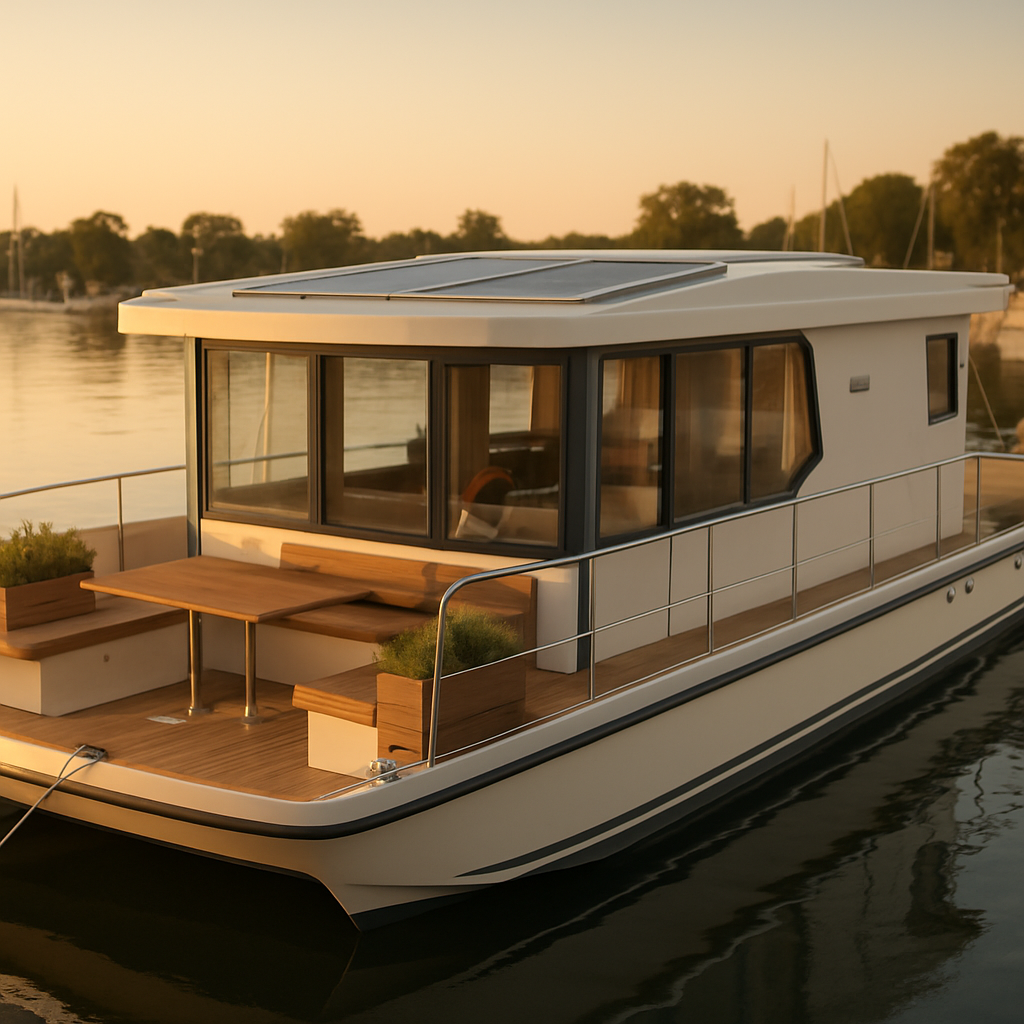
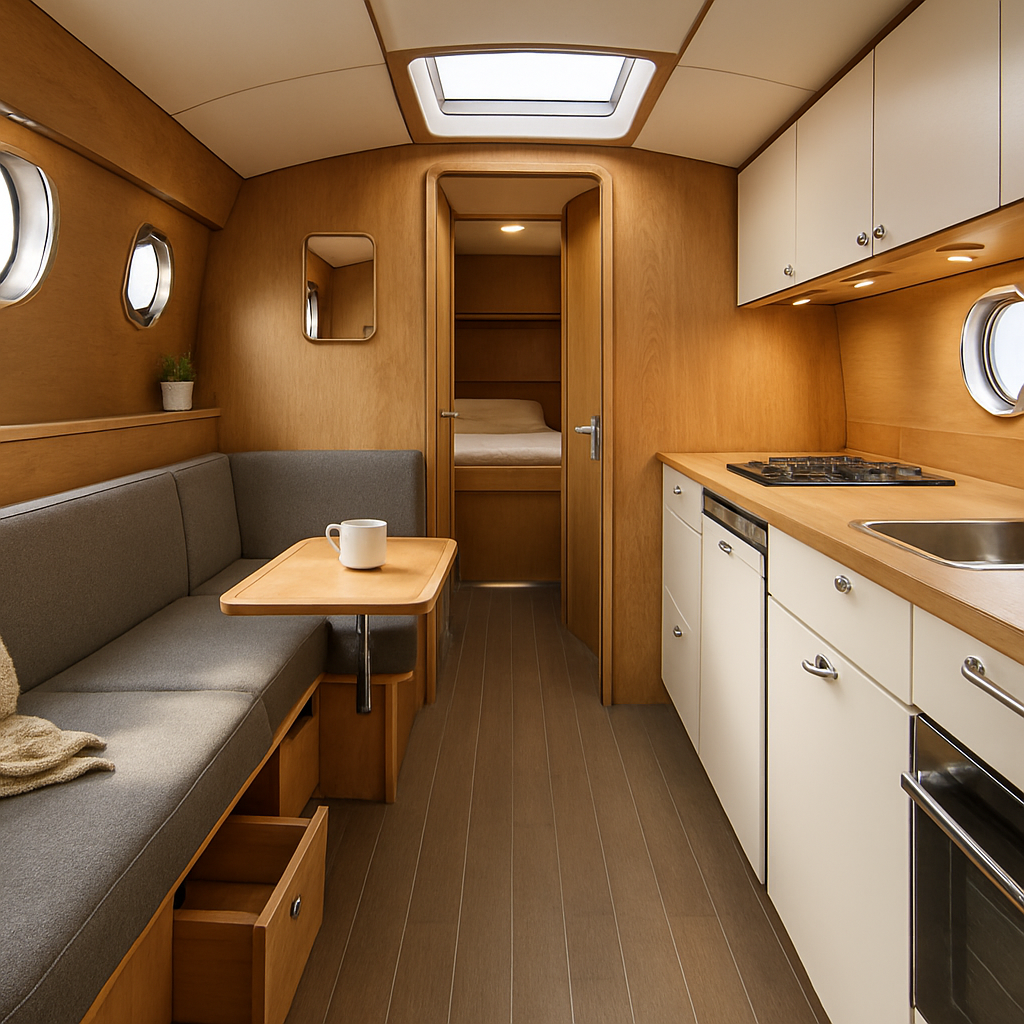
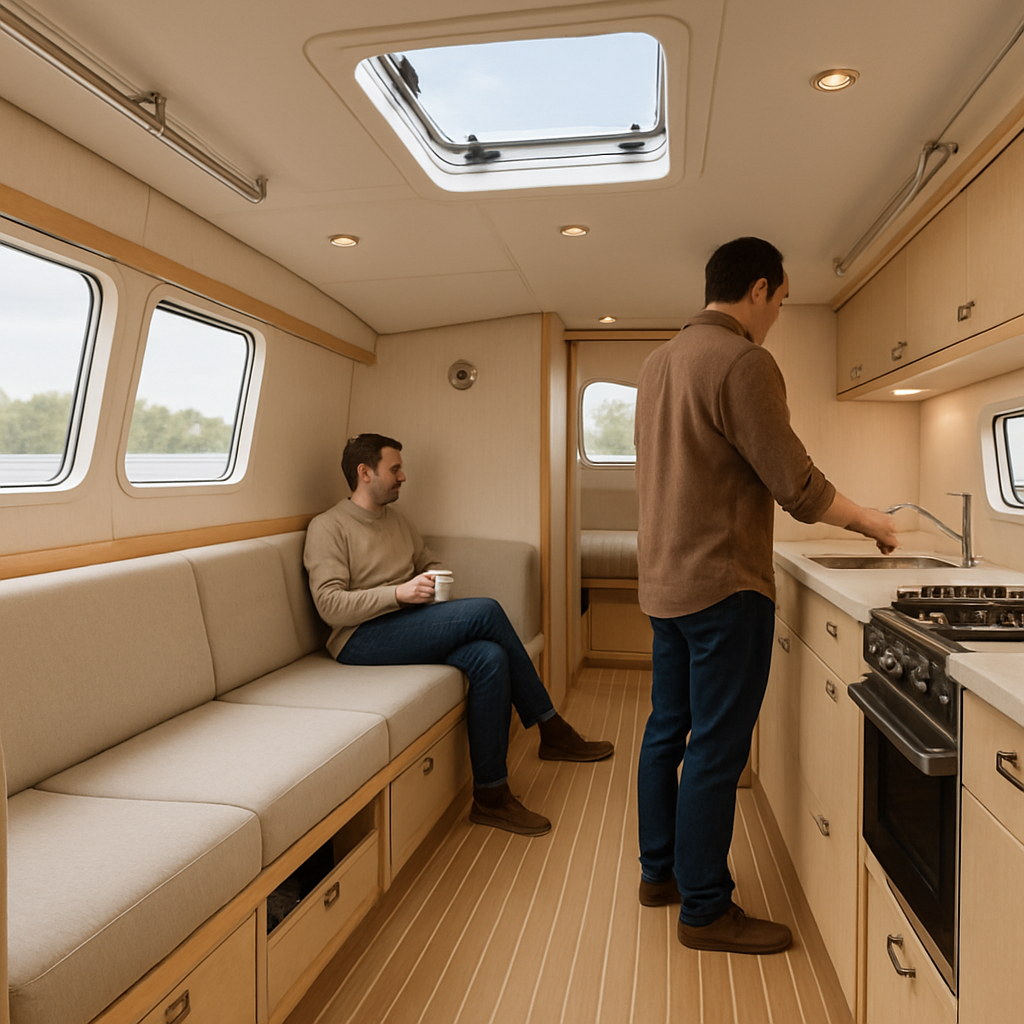
Picture this: a 35-foot houseboat with a midships open living area. The galley runs along the starboard side, with a gimbaled two-burner stove, under-counter refrigerator, and a slim pantry with toe-kick drawers. Opposite, an L-shaped settee converts to a guest berth and hides deep storage beneath.
Large forward windows flood the Open Plan Living Areas with daylight. An overhead hatch plus dorade vents deliver natural cross-ventilation. For privacy, a sliding acoustic screen seals off the forward cabin when needed without blocking light. The battery bank and fresh water tanks live beneath the companionway steps—low and centered. LED task lights under the galley cabinets and dimmable overhead lights keep ambiance flexible. Result: a warm, bright, and surprisingly roomy interior that’s as practical as it is pretty.
Conclusion — Make Open Plan Living Areas Work for You
Open Plan Living Areas on houseboats are achievable, even desirable, when you balance aesthetics with marine realities. Keep weight central, secure furniture, choose reflective, durable finishes, and plan ventilation carefully. Use multifunctional furniture to maximize utility, and embrace acoustic and privacy solutions that preserve light and openness. With thoughtful planning—and a bit of nautical creativity—you can turn a compact hull into a roomy, comfortable floating home that’s both welcoming and seaworthy.
Ready to Start?
If you’ve got a sketch or a photo, get a quick consult from a marine carpenter or naval architect. Small changes early in the design process save you headaches later. Want more hands-on tips or a layout review? Reach out to the Home Boat Building community and share your plans—we love a good houseboat transformation.
FAQ — Common Questions About Open Plan Living Areas (You)
Can I remove bulkheads to create Open Plan Living Areas?
Yes, but don’t do it on a whim. Du should first have a naval architect or qualified marine surveyor check whether the bulkhead is structural or watertight. If it’s load-bearing or part of the boat’s flotation compartments, removing it will require reinforcement elsewhere. If it’s non-structural, you can usually open it up with proper backing, new stringers, or engineered beams to keep longitudinal strength intact.
How do I maximize natural light in an open-plan houseboat interior?
Natural light is one of the quickest ways to make Open Plan Living Areas feel bigger. Du should add well-placed ports, larger windows, and overhead hatches where structure permits. Use light-colored finishes and reflective surfaces, keep window obstructions minimal, and orient seating toward views. Light wells and glazed companionway doors also draw daylight into deeper spaces without compromising privacy.
Which flooring works best for bright, low-maintenance Open Plan Living Areas?
Go for marine-grade vinyl planks, synthetic teak, or waterproof laminate designed for marine use. Du want something light-toned to reflect light, non-slip when wet, and easy to clean. These options resist moisture and salt, won’t require constant varnishing like real teak, and help maintain a consistent visual flow across the open area.
How do I keep furniture secure while maintaining flexibility?
Built-ins are the safest route: bolt them to structural points with backing plates and use positive-lock hardware. For free-standing pieces, choose lightweight, easily lashed items that can be stowed. Du can also use fast-release brackets for occasional rearrangement—this gives you both security underway and flexibility at anchor.
What ventilation setup prevents mold and condensation in open layouts?
Combine passive and active ventilation. Du should install opening ports and dorade vents for cross-flow, plus extractor fans in the galley and bathroom. In humid climates, consider a heat-exchange ventilator or a compact dehumidifier. Proper insulation and sealed windows reduce cold surfaces where condensation forms, so treat the envelope as part of the ventilation plan.
How should I distribute weight in an Open Plan Living Area?
Keep heavy systems low and close to the centerline—batteries, tanks, and inverters belong as low as possible. Du should avoid stacking heavy items high or far off-center. Spread stored weight evenly port to starboard, and plan tank locations to minimize changes in trim as fuel or water is used. Early weight planning prevents nasty surprises once everything’s installed.
Which materials resist the marine environment but still keep interiors bright?
Use marine-grade plywood or composite panels with durable paint or varnish in light tones. For hardware, choose 316 stainless steel or bronze. Upholstery should be UV- and mildew-resistant fabrics with removable covers. Sealants need to be marine-grade polysulfide or polyurethane to keep moisture out of joints. These choices reduce maintenance while maintaining a bright aesthetic.
How can I create privacy without sacrificing the openness?
Partial-height screens, sliding or folding doors, curtains, and frosted glass are great options. Du can use an acoustic sliding panel to separate sleeping spaces on demand, or a bookshelf as a daylight-permitting divider. Even a retractable curtain gives instant privacy at night while keeping the daytime layout open and social.
What galley layout is best for an open plan houseboat?
It depends on beam and traffic, but compact L-shaped or single-run galleys are common for narrow hulls because they keep circulation clear. Du should prioritize the stove-sink-fridge triangle scaled to the boat’s size, and consider gimbaled stoves or stove guards for safety at sea. Covers for sinks and stoves expand prep space when needed.
How do I manage acoustics so conversations and systems don’t clash?
Start by isolating noisy equipment on resilient mounts and use mass where possible in partitions. Du should add absorptive surfaces like upholstery, rugs, and acoustic panels to reduce reverberation. Strategic placement of soft furnishings and curtains will cut echo without making the interior feel heavy or dark.
Do open plan layouts increase fire risk?
Not necessarily, but they can allow smoke and heat to spread faster. Du must install appropriate smoke and CO detectors, keep fire extinguishers accessible, and ensure gas systems have remote shut-offs. For heavy cooking, a small automatic suppression near the galley adds peace of mind. Compartmentalized escape routes remain essential even in open plans.
When should I involve a naval architect or marine carpenter?
Bring them in early—before you remove walls, move tanks, or change major structural elements. Du will save time, money, and headaches by getting a pro to check stability, strength, and systems integration at the design stage. Even for interior fit-out questions, a marine carpenter can advise on secure attachments and material selection to keep your open plan both pretty and seaworthy.