Discover How Efficient Interior Layouts Turn Tiny Houseboats into Liveable Little Palaces — Attention, Interest, Desire, Action
You want a snug, stylish houseboat that feels roomy, right? Efficient Interior Layouts are the secret sauce: they help you squeeze comfort, storage and functionality into the smallest hull without sacrificing safety or style. Read on and you’ll find practical design moves, honest trade-offs, and quick wins you can apply today — whether you’re drafting plans, retrofitting an old cabin, or daydreaming on a mooring. By the end you’ll be ready to mock up a layout that actually works for real life (not just Instagram moments).
If you’re hunting for concrete inspiration to jumpstart your plans, take a look at curated examples that highlight clever planning and realistic builds; many builders share measured drawings and photos that show how ideas translate into reality. For curated project ideas and layout inspiration that blend form and function, check out Houseboat Design Ideas, which collects practical examples and design thinking you can adapt to your own hull. Those references often spark small adaptions that solve big problems.
Natural light makes or breaks the perception of space on a small craft — it’s amazing how much brighter interiors feel with the right hatch and port placement. If you want hands-on tips for maximizing daylight while keeping privacy and insulation in mind, the guide on Maximizing Natural Light lays out effective strategies for port sizing, reflective surfaces, and strategic mirror placement. Applying those ideas early in your plan will change how you prioritize layout and storage.
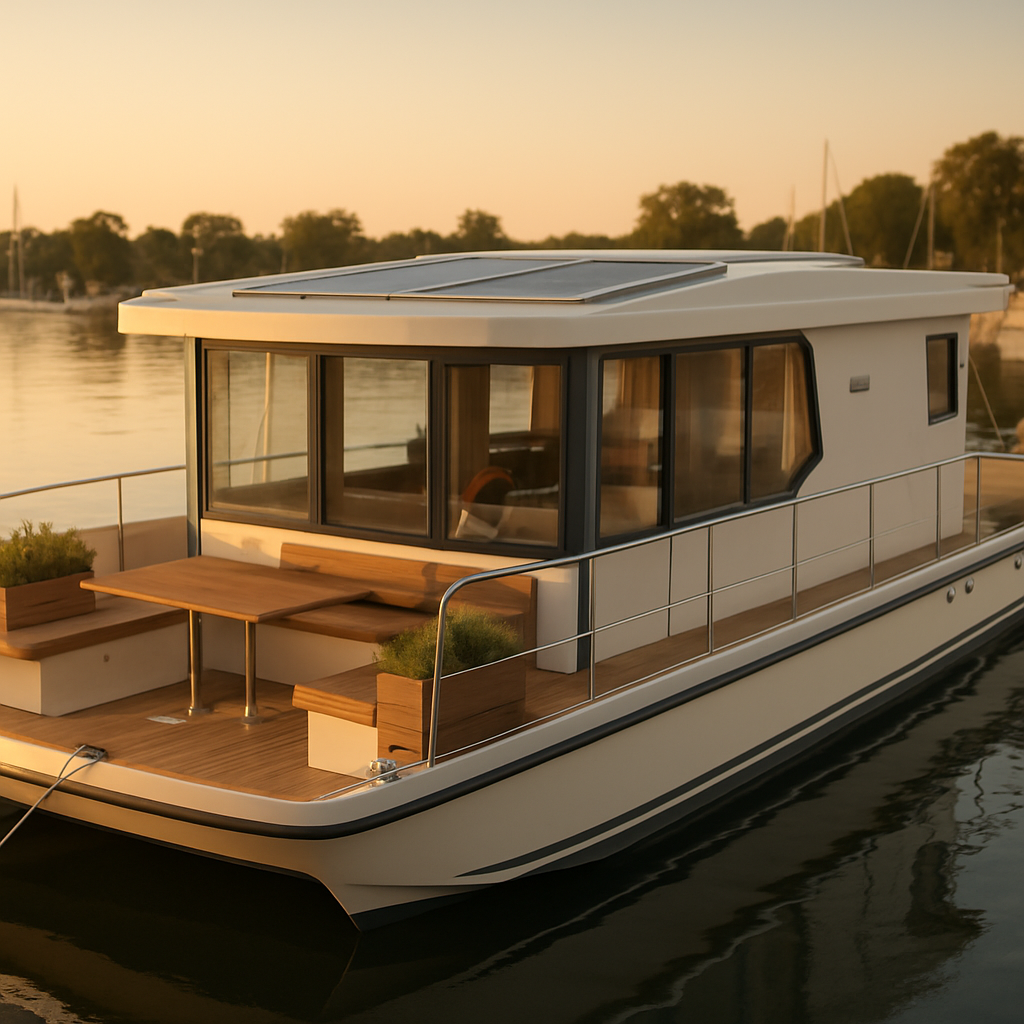
Don’t forget the vertical possibilities above the main cabin: rooftop decks and raised platforms extend living space and create great outdoor rooms for relaxing, entertaining, or gardening. For examples and considerations about structure, railing, and usable roofing surfaces, browse posts about Roof Deck Spaces, which explain how to use a roof deck safely and stylishly while protecting underlying cabin ingress and waterproofing. A smart roof deck can double perceived living area when designed with access and drainage in mind.
Efficient Interior Layouts for Compact Houseboats: Space-Saving Design Tricks
When you design Efficient Interior Layouts for a compact houseboat, you’re really redesigning habits. It’s less about squeezing furniture in and more about making every surface and volume work harder. Think of it like packing a high-performance expedition pack: nothing wasted; everything accessible. Start with a few strategic moves that create generous-feeling spaces from modest square footage.
Start with a clear plan
Sketch a primary axis — a straight or gently curving route from entry to main living area. That axis organizes the layout and reveals wasted niches. Keep that path mostly unobstructed and let secondary functions branch off it.
Vertical thinking wins
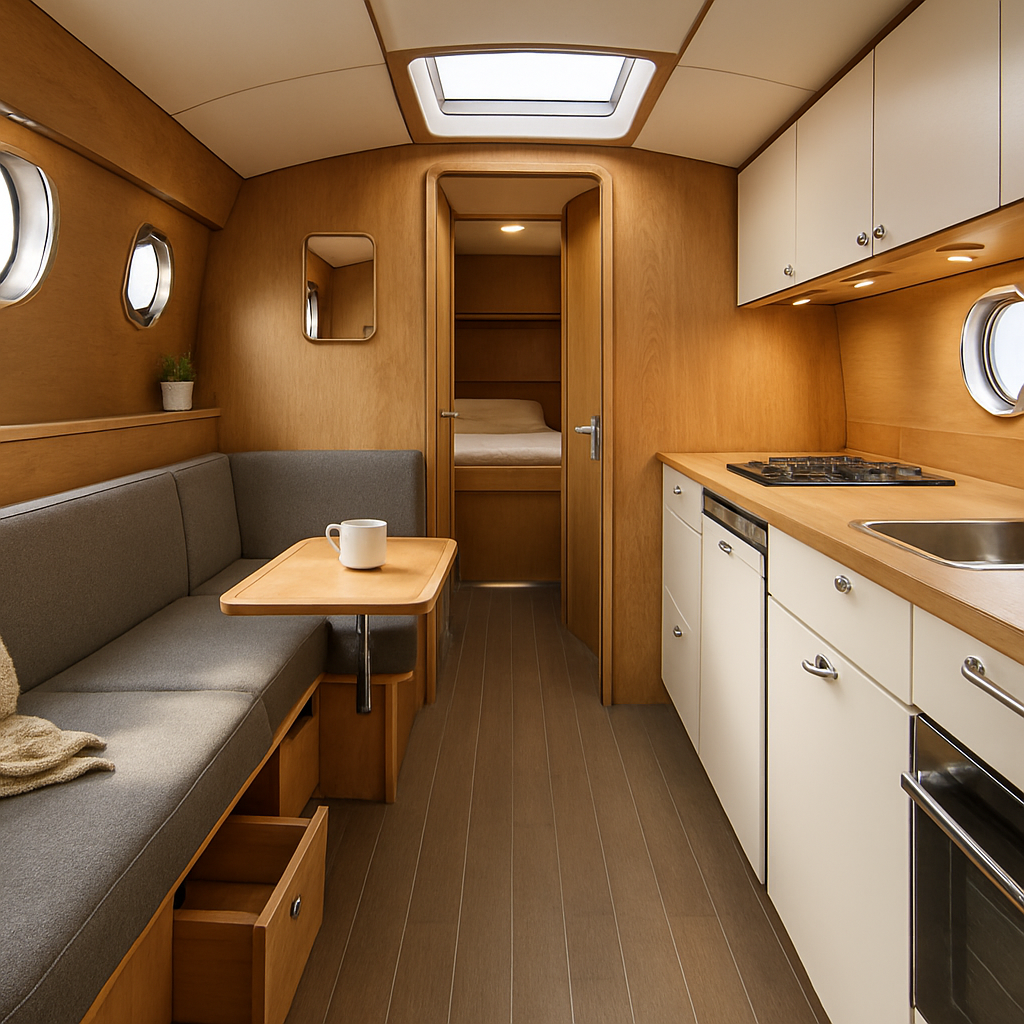
On land we sprawl. On water, you’ve got to stack. Lofts, overhead lockers, and under-berth drawers reclaim cubic meters that would otherwise be dead space. Use the vertical plane for storage, lighting, and secondary functions — but balance it so weight stays low and centered.
- Built-in seating with storage beneath
- Overhead cabinets that won’t obstruct light from ports
- Stairs that hide drawers or systems access
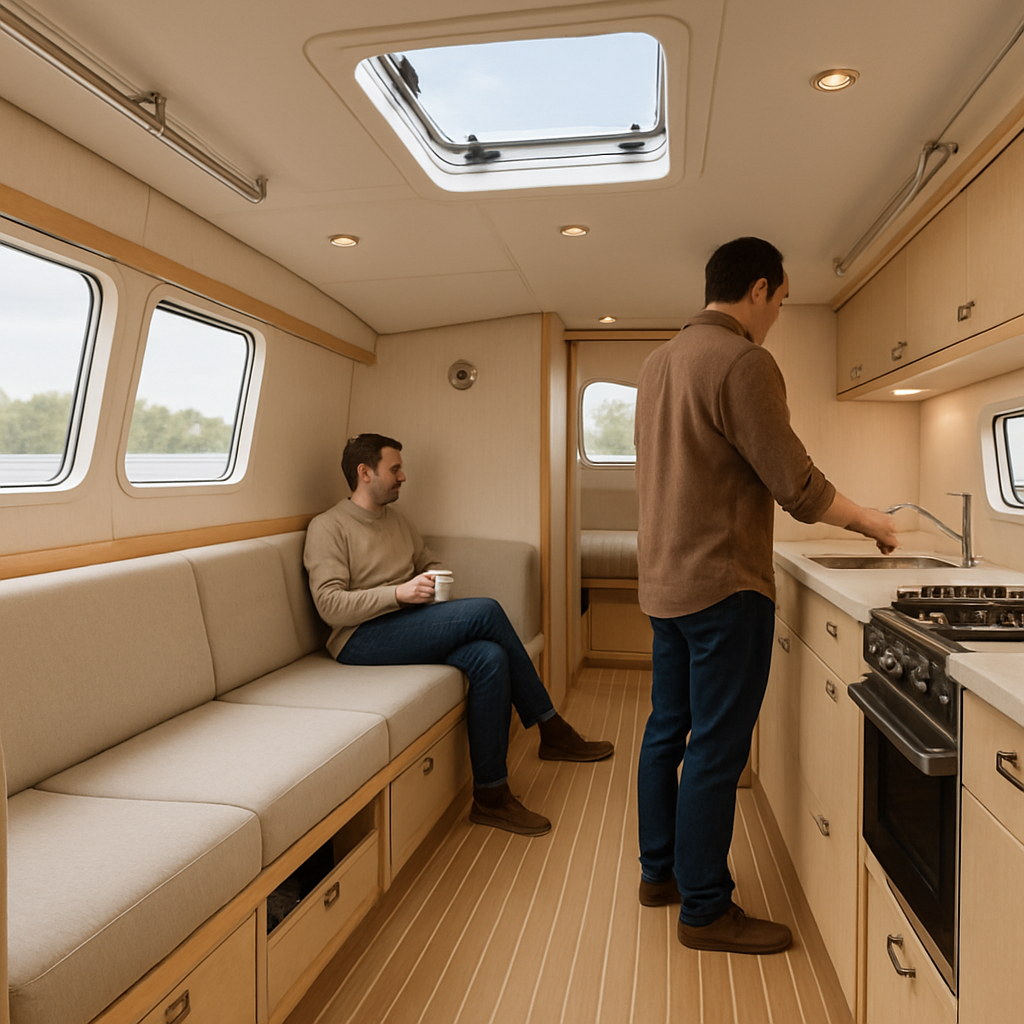
Little choices — like specifying 18–20″ deep seating rather than bulky 24″ sofas — add up. You keep the footprint comfortable and free up circulation width. Pocket doors and sliding panels are also subtle game-changers: they remove swing radius and make corners usable.
Maximizing Flow: Efficient Interior Layouts for Small-Scale Houseboats
Flow is how the interior breathes. Good flow makes small spaces feel intuitive and safe; bad flow makes you bump into corners and resent every trip to the galley. Efficient Interior Layouts that prioritize flow reduce stress and help the boat feel larger than it is.
Principles to improve flow
- Define a main axis: Keep a clear route at least 24–30″ wide where possible; that’s your spine.
- Place private zones off the axis: Sleep and bathing areas should be tucked away so day traffic doesn’t disrupt them.
- Manage heavy items sensibly: Put batteries, tanks and engines low and near the centerline for stability and to avoid awkward detours around them.
- Promote direct sightlines: Open views from entry to social areas make interiors feel airy and reduce perceived clutter.
- Design one-person workflows: Most boat tasks are solo; arrange galley and maintenance areas to be usable by one person, minimizing cross-traffic.
Ask yourself: can you carry a cup of coffee from the galley to the helm without stepping aside? If not, rethink the route. Flow isn’t glamorous, but it’s the difference between “cute” and “livable.”
Multi-Functional Interiors: Flexible Layouts for Everyday Living on Board
If you love flexibility, you’ll love multi-function. Efficient Interior Layouts that embrace multi-purpose furniture let the same footprint support work, rest, cooking, and guests. That’s less clutter, fewer compromises, and a lot more freedom.
Design patterns that multiply usefulness
- Convertible seating: Benches that transform into beds; cushions that stack into guest sleeping surfaces.
- Fold-down surfaces: Wall tables that work as dining, work, or prep counters and stow away when not needed.
- Sliding/rotating cabinets: Cabinets with dual access let the same module serve two zones (e.g., galley and cockpit).
- Modular furniture: Stackable units you can reconfigure for short stays versus long-term living.
- Dual-purpose partitions: Screens that are storage, divider, and media mount all in one.
Locking hardware and positive latches are non-negotiable. It’s a small detail that separates an elegant conversion from a bed that creaks its way into disaster while underway.
Lighting, Storage, and Access: Efficient Interior Layouts that Feel Spacious
Even excellent floor plans feel tight without good light and smart storage. Efficient Interior Layouts pay attention to three dimensions of perception: light, storage depth, and system access. Nail these and your tiny cabin feels generous.
Lighting that expands space
Natural light opens interiors like nothing else. Maximize ports, deck hatches, and place mirrors or glossy finishes to bounce light into corners. For evenings, layer light: ambient overhead LEDs, focused task lights in the galley and head, and accent lighting to create depth. Under-cabinet strips are cheap and transformative.
Storage that’s actually usable
- Use voids: Under-berth, under-stairs, above bunks — these spaces swallow gear if organized with bins and dividers.
- Divide and label: Small compartments beat one massive locker when it comes to retrieval and weight distribution.
- Vertical systems: Pegboards and slatwalls keep tools and cooking gear visible and handy.
Access and safety
Design access panels for electrical, plumbing and fuel so you don’t have to tear out furniture to service systems. Keep emergency exits and egress paths clear. When in doubt, think maintenance: future-you will thank present-you for making systems reachable.
Kitchen and Bath in Tiny Footprints: Efficient Interior Layouts for Practical Living
Galleys and heads need to be both compact and robust. Efficient Interior Layouts here are about prioritizing what you actually use and choosing compact, marine-grade appliances that fit the rhythm of life on the water.
Galley tips that actually help
- Linear or L-shaped galleys: These keep circulation clear while creating an efficient work triangle in miniature.
- Compact appliances: Two-burner cooktops, drawer-style fridges, and combination microwave-convection ovens save space and often energy.
- Cover boards: Sink covers or flush cutting boards add prep space when the sink isn’t in use.
- Pull-out pantries and tilt trays: They reduce dead space and make every inch accessible.
Heads: practical and low-drama
Decide early: wet head or separate shower? Wet heads are space-savers and easier to waterproof, but separate showers add comfort. Bi-fold doors, corner sinks, and wall-mounted fixtures shrink footprints while staying practical. Don’t skimp on ventilation — a 12V exhaust fan and a good hatch prevent damp smells and mildew.
Loft Beds, Fold-Outs, and Stowaways: Innovative Efficient Interior Layouts for Limited Space
Sleeping solutions define the day-night shift on a houseboat. Efficient Interior Layouts use lofts, fold-outs and clever stowaways to reclaim daytime function and keep nights comfortable and secure.
Lofts and raised sleeping platforms
Lofts give you storage or equipment space beneath and a cozy nook above. Aim for 30–36″ of headroom at the center for comfort. Add secure rails, a proper ladder with handholds, and consider building lower lofts if your boat sees a lot of motion.
Murphy beds and fold-away solutions
Murphy beds free up living space during the day. Use marine-rated lift hardware and positive locks to make them safe underway. A well-designed flip-up bed can blend into cabinetry and add a sofa surface when stowed.
Stowaways and hidden tricks
- Stairs with liftable treads for sealed storage
- Under-berth drawers that slide on full-extension marine runners
- Tables that raise to dining height or collapse into the floor
Practical Layout Examples and Templates
Examples help you visualize how Efficient Interior Layouts translate into real plans. Below are three adaptable templates that you can modify to suit hull type, beam, and how you live aboard.
Layout A: 25–30 ft narrow houseboat — single open plan
Entry into an open salon with a built-in L-seat that converts into a guest berth. A linear galley runs along one side with a two-burner cooktop and a drawer fridge. The wet head is tucked midships with a pocket door to save swing room. A forward loft bed above storage keeps sleeping separate without wasting floor area.
Layout B: 30–35 ft wide-beam houseboat — two-zone plan
Stern cockpit opens into a raised salon with a fold-down dining table. Midships galley island (with slide-out prep surface) centers the boat for balance. Forward en-suite with fixed double berth and compact head provides privacy. Starboard walkway carries storage and systems access, keeping flow tidy.
Layout C: 35–45 ft small liveaboard — multi-module approach
Split-level arrangement: mechanical below, main living mid-level, sleeping loft above. A bank of modular cabinets on the bulkhead contains a Murphy bed, a desk and entertainment gear. Galley has slide-out counters, and a stacked washer/dryer hides in a utility closet near the head. Big windows and a deck hatch bring in light and fresh air.
Building and Material Tips for Lightweight Yet Durable Interiors
Material choices make or break both weight and longevity. Efficient Interior Layouts should pair lightweight construction with marine durability: the goal is minimal weight penalty and maximum lifespan.
- Marine-grade plywood: Okoume or birch with epoxy coating resists rot and keeps weight down.
- Composite panels: Foam-core or honeycomb panels make stiff bulkheads with less mass.
- Stainless and bronze hardware: Corrosion-resistant fasteners keep joints serviceable for years.
- Flexible adhesives and sealants: Use products rated for the marine environment so joinery tolerates movement and moisture.
- Easy-care surfaces: Solid-surface tops, laminate with moisture-resistant cores, and coated, slip-resistant flooring cut down maintenance time.
Think long term: lighter weight often equals better fuel efficiency and calmer handling, while durable finishes reduce the constant need for repairs in a humid maritime environment.
Checklist and Measurements Before Finalizing Layout
Before you cut plywood, run through this checklist. Missing one of these might mean an ugly retrofit later.
- Clearance checks: primary circulation at least 24–30″; pinch points 18–22″.
- Systems access: removable panels for electrical, plumbing, and fuel systems.
- Full-scale mock-ups: use tape and cardboard to test daily ergonomics.
- Weight and balance: heavy gear low and centered; consult a naval architect on larger builds.
- Ventilation planning: powered exhausts, deck vents, and cross-ventilation paths.
- Emergency egress: ensure designated escape hatches and windows remain unobstructed.
FAQ — Common Questions About Efficient Interior Layouts
1. How much does it cost to build an Efficient Interior Layout for a compact houseboat?
Costs vary a lot depending on materials, systems, and whether you DIY or hire pros. For a basic, DIY-friendly compact interior using marine-grade plywood and off-the-shelf compact appliances, budget roughly $8,000–$20,000 for materials and appliances. If you choose high-end finishes, composite panels, built-in HVAC, and professional labor, expect $30,000–$70,000 or more. Plan for contingencies (10–20%) and remember that efficient design can save you money by reducing wasted material and simplifying systems.
2. What layout types work best to maximize space on small houseboats?
Linear galleys, L-shaped plans, and defined main axes are your friends. Efficient Interior Layouts that use a single spine for circulation, tuck the head off the main route, and stack sleeping areas (loft or raised platforms) tend to perform best. Modular furniture and multi-use zones — like a dining bench that turns into a guest berth — help you get more use from each square foot. Mock up a full-scale tape plan to test the flow before building.
3. Which materials should I pick for lightweight, durable interiors?
Choose marine-grade plywood (okoume or birch) with epoxy or varnish, foam-core or honeycomb composite panels for large surfaces, and stainless or bronze fasteners. Use flexible, marine-rated adhesives and sealants so joints tolerate movement. For surfaces, go with solid-surface counters or moisture-resistant laminate and non-slip, coated flooring. These choices keep weight down, resist rot, and reduce maintenance over the life of the boat.
4. How do I prevent condensation and moisture problems?
Ventilation, insulation, and proper finishes are the trio that wins. Install a 12V exhaust fan in the head and a powered vent in the galley, include cross-ventilation via hatches and opening ports, and use closed-cell insulation with appropriate vapor barriers in cold climates. Choose mildew-resistant paints and breathable fabrics, and consider a small dehumidifier if you live aboard year-round in humid areas. Regularly airing out lockers helps too.
5. Are loft beds and Murphy beds safe while underway?
Yes — if you design them correctly. You need secure guardrails, positive latches or locking hardware, and ladders or stairs with handholds. Keep lofts lower on boats that see a lot of movement to reduce motion discomfort. Use hardware rated for marine vibration and test under real conditions. It’s a small step to include secondary restraints for bedding in rough seas — better safe than sorry.
6. How should I plan weight and balance when laying out interiors?
Place heavy items low and near the centerline — batteries, tanks and large machinery should sit close to the keel and midpoint of the hull. Distribute stored weight evenly port to starboard and fore to aft to avoid trim issues. If you’re unsure, consult a naval architect or use basic weight/center-of-gravity worksheets to model the effects. Efficient Interior Layouts can help by clustering dense items and using lightweight materials elsewhere.
7. Can I do the interior fit-out as a DIY project or should I hire professionals?
It depends on your skills and the scope. Simple builds — cabinetry, simple plumbing, and compact galleys — are realistic DIY projects if you’re handy. Complex systems (fuel, electrical, structural modifications) should involve pros. A hybrid approach works well: do the cosmetic and furniture work yourself, and hire certified contractors for systems and critical installations. That keeps costs down while ensuring safety and compliance.
8. What compact appliances are best for a tiny galley?
Look for drawer-style fridges, two-burner induction or LPG cooktops, and combination microwave-convection ovens. Drawer dishwashers save space, and tankless or compact water heaters reduce plumbing bulk. Choose units with low power draw if you rely on batteries or a small inverter. These appliances let you keep functionality without expanding the footprint, an essential principle of Efficient Interior Layouts.
9. How do I make sure I can access electrical and plumbing systems later?
Design removable access panels and separate service lockers early on. Keep distribution panels at reachable heights and avoid sealing systems behind permanent cabinetry. Use quick-disconnect fittings where safe and clearly label hoses and wires. Think maintenance: if you’ll need to replace a pump or battery, ensure you can reach and remove it without dismantling the interior.
10. Do I need permits or special classification for interior work on a houseboat?
Regulations vary by country and even by marina. In many places, cosmetic and furniture changes don’t require permits, but structural, electrical, and fuel system changes might. If you live aboard or intend to charter, local authorities may have safety, electrical, and sanitation standards. Always check with your marina and local maritime authority before major modifications to avoid compliance headaches later.
11. How can I maximize natural light and ventilation without hurting privacy?
Place larger ports and deck hatches where they’ll flood main living areas with daylight, and use frosted or shaded glazing for privacy where needed. Mirrors and glossy surfaces bounce light into dark corners. For ventilation, pair opening ports with a powered exhaust and cross-ventilation paths. The principle of Efficient Interior Layouts here is to plan daylight and airflow early so storage and bulkheads don’t block them later.
12. What are the best storage strategies for living aboard long-term?
Go vertical and modular. Use under-berth drawers, stair storage, overhead lockers, and wall-mounted peg systems. Compartmentalize with labeled bins and avoid one big locker where things get lost. Store heavy items low and frequently used items at waist height. Rotate seasonal gear logically and keep a small, well-organized pantry for food. Good storage is the backbone of any Efficient Interior Layout — it keeps your life on the water calm and comfortable.
Conclusion: Start Small, Think Big — Efficient Interior Layouts Are About Smart Choices
Efficient Interior Layouts are less about minimalism for its own sake and more about purposeful design. The best boats feel bigger because they anticipate needs, not because they pretend the space is larger. Start with a clear axis, design multi-functional furniture, prioritize light and service access, and build with materials that balance weight and durability. If you mock-up at full scale before building, you’ll avoid costly mistakes and discover clever tweaks you’d never plan on paper.
Ready to try a layout? Tape out a life-size version of your planned galley and sleep areas this weekend. Move through it with a mug of coffee and a laundry basket — you’ll spot awkward clearances fast. With a few thoughtful choices, your Efficient Interior Layout will make living aboard not just feasible, but genuinely enjoyable.