Waterproofing Joint Details for Houseboats: Essentials and Best Practices
Imagine unpacking a fresh cup of coffee only to find a slow drip tracing a brown line down the cabin wall. Annoying, right? Waterproofing Joint Details are the frontline defense against that exact scenario. On a houseboat, joints—where materials meet, change direction, or pierce the structure—are the most vulnerable spots for leaks. Get those details right, and you save yourself headaches, mold, rot, and costly repairs. Ignore them, and you’re playing a long game with slow, expensive losses.
Why joints matter more on floating homes
Houseboats move. They flex. The sun cooks them in summer, they chill in winter, and salt or fresh water constantly laps at their edges. That combination means joints face repeated movement, thermal cycling, and constant exposure. Waterproofing Joint Details must therefore be flexible, well-prepared, and accessible for maintenance. A properly designed and installed joint will accept movement without losing adhesion or tearing. That’s the core principle you’ll see repeated throughout this guide.
As you detail and sequence your build, remember that joints rarely exist in isolation—electric runs, framing, and overall construction sequencing influence how you design and seal them. For example, consult the Electrical System Routing guidance to avoid locating conduits through crucial waterproof lines or interrupting bedding paths; this helps prevent inadvertent leaks caused by later modifications. Broader process and staging advice that affects joint planning is covered in Houseboat Construction Techniques, which explains how to prioritize weatherproofing during assembly. Also, when joints abut or penetrate structural members, review Structural Frame Assembly insights so backing plates, tolerances, and fastener placement support proper bedding and sealant depth.
Choosing Waterproofing Materials for Houseboat Joints: A Homeboatbuilding.com Guide
Picking materials is where many DIY builders stumble. There are dozens of products—silicones, polyurethanes, polysulfides, tapes, membranes—and they don’t all behave the same. Choose the wrong one and it can look fine for a season and then fail spectacularly.
Key criteria when selecting materials
- Movement capability: Look for sealants with high elongation and recovery; boats move.
- UV and salt resistance: Constant exposure to sun and salt demands durable chemistries.
- Adhesion and compatibility: Not all sealants stick to all substrates—primer might be required.
- Service life and maintainability: Consider how easy it is to replace or repair later.
- Toxicity and handling: Marine products vary; some require ventilation and gloves—plan accordingly.
Best choices for common needs
There’s no single perfect product, but here are practical recommendations:
- Window & door bedding: High-quality polyurethane or polysulfide sealants. Use backer rod to control depth and butyl tape under flanges for initial dry seal.
- Roof membranes and large areas: PVC, EPDM, or TPO membranes that are welded or heat-fused for continuous seams. For tricky shapes, high-performance liquid-applied membranes can work.
- Through-hulls & hardware: Marine-grade bedding compounds and thread sealants. Mechanical fastenings plus backing plates are essential.
- Small gap sealing and temporary fixes: Butyl tapes, compression gaskets, and MS polymers can save you in the short term.
Material pitfalls to avoid
Silicone is often touted because it’s flexible and cheap. But it can conflict with other adhesives and is hard to paint. Polysulfides are great for longevity and chemical resistance but can be firmer and slower to cure. MS polymers are user-friendly but differ in UV tolerance. Don’t pick a product because it’s popular—match it to the job and substrate.
Common Joint Seals and Waterproofing Techniques for Floating Homes
Techniques matter as much as products. Two projects with the same sealant can have wildly different outcomes depending on prep, joint geometry, and installation.
Backer rods and two-sided adhesion
A backer rod is a small but crucial part of Waterproofing Joint Details. Placed inside the joint, it controls sealant depth and prevents three-sided adhesion, allowing the sealant to stretch and compress properly. Closed-cell foam backer rods are what you want—open-cell will soak water and cause problems.
Compression gaskets and physical seals
Doors, hatches, and some windows benefit from compression seals—rubber or foam gaskets that create a mechanical barrier when compressed. They’re great because they’re replaceable and perform well when set up with correct compression loads and hardware.
Membranes and welded seams
For roofs and decks, welded membranes eliminate many small joints and concentrates failure risk to seam welds, which—if properly done—are robust and long-lived. Professionally executed welds are usually more durable than multiple small caulked joints.
Bedding vs. structural sealing
Understand the difference: bedding compounds or sealants primarily provide watertightness and some gap filling. Structural adhesives bond and carry load. For most houseboat joints, use mechanical fastening for structure and sealants for watertightness—don’t expect the caulk to hold the weight of a window frame alone.
Step-by-Step Tutorial: Sealing Windows, Doors, and Roof Joints on a Houseboat
Now let’s get practical. Below are step-by-step procedures you can follow for the most critical joints. Adjust for the products you select and the manufacturer’s curing and priming instructions.
Tools and general supplies
- Marine-grade sealant (polyurethane, polysulfide or MS polymer)
- Closed-cell backer rod, various diameters
- Butyl tape and marine bedding compound
- Appropriate primer and solvent wipes
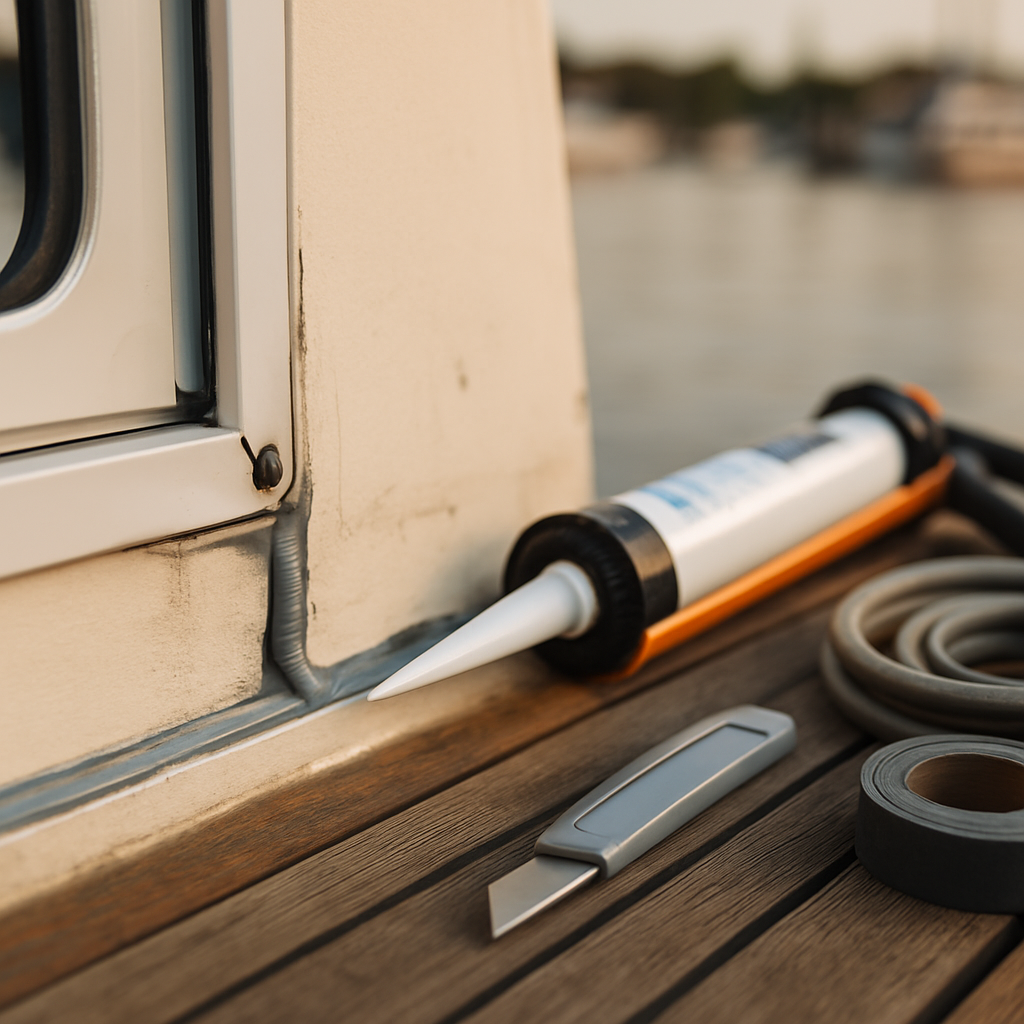
- Caulking gun, spatula/small trowel, masking tape, utility knife
- Safety gloves, goggles, ventilation mask (for solvent fumes)
Sealing windows and doors — a step-by-step approach
- Remove or loosen the unit: If you can, remove the window or door to achieve better access. If not possible, loosen fasteners to break the old seal and relieve compression.
- Strip old bedding: Carefully remove old sealant, butyl, and degraded materials. Use a plastic scraper near glass to avoid scratches and a metal scraper for painted surfaces.
- Prep surfaces: Sand or abrade contact faces lightly, then clean with solvent per the sealant maker’s recommendations. Let everything dry thoroughly—moisture is a common cause of failure.
- Prime if required: Certain plastics and paints need a primer to promote adhesion. Check compatibility—this step pays dividends later.
- Install backer rod and/or butyl: Put a backer rod in the gap sized so the sealant depth remains correct. For flanged windows, lay butyl tape on the flange to create an immediate dry seal during installation.
- Apply sealant: Dispense a continuous bead around the perimeter. Avoid starting and stopping mid-run—continuous beads reduce the risk of leaks at joints.
- Set and fasten: Place the window or door, align, and tighten fasteners evenly to compress the sealant without over-torquing. Remove excess squeeze-out promptly.
- Tool the bead: Smooth the bead to a concave shape so water sheds easily. Masking tape helps create a neat edge if desired.
- Allow cure: Follow cure times. Do not expose to heavy rain or water spray until the manufacturer’s minimum cure time has passed.
Sealing roof joints and flashings — practical steps
- Inspect the roof: Find any damage, blisters, or loose membrane edges. Repair obvious tears before sealing transitions.
- Clean and prep: Remove dirt, algae, and contamination. For membranes, a clean dry surface is non-negotiable for good welds or adhesion.
- Install termination hardware: Use termination bars where the membrane meets bulkheads. Fasten through a sealant bed or compression tape, then seal screw heads afterward.
- Weld or seal seams: For PVC/EPDM/TPO membranes, heat or extrusion weld seams per the membrane manufacturer’s technique. For liquid membranes, apply consistent coats and reinforce corners with fabric where necessary.
- Detail transitions: Where deck meets cabin wall, install a proper flashing with a slope and a drip edge so water doesn’t sit at the joint.
- Finish and test: Seal all fasteners and terminations. After curing, test by spraying or observing over a few rain events.
Maintenance and Inspection of Waterproofing Joints on a DIY Houseboat
No matter how well you execute Waterproofing Joint Details, maintenance is the secret sauce that keeps everything working for years. A little attention now avoids labor-intensive repairs later.
Regular inspection schedule
- Quarterly walk-around: Quick visual scan for obvious issues—squeeze-out that’s turned brittle, pulled-away beads, or ponding water.
- Biannual deep check: Inspect window and door beads, decking seams, through-hull fittings, and the roof’s flashing lines. Look under trim where water can hide.
- After storms or freezing events: Re-check suspect joints and cavities that can trap water and freeze.
What to look for
Don’t just glance—look for subtle cues: hairline cracks in sealant, soft or chalky material, coating blistering, rust streaks near fasteners, or mold and mildew just inside an interior panel. These are early warnings.
Maintenance actions that actually help
- Clean joints annually and clear debris from scuppers and drains.
- Replace small sections of sealant as soon as you spot hardening or pull-back. Don’t wait for a big failure.
- Retorque and check backing plates on through-deck fittings.
- Keep a maintenance log with date, area repaired, product used, and cure times—future-you will thank present-you.
Troubleshooting Common Problems and Repair Advice
Even careful work can run into surprises. Here are straightforward fixes for common leaks tied to Waterproofing Joint Details.
Leaky corners at windows or doors
Usually caused by incomplete sealant, poor tooling, or lack of backer rod. Remove interior trim to access corners, clean out the old sealant, and re-bed with a properly sized backer rod and compatible sealant. Make sure corners are continuous—no gaps.
Persistent drips after resealing
If a leak continues, the problem might be a hidden water path or inadequate substrate prep. You may be experiencing three-sided adhesion (sealant stuck to two faces and the bottom, restricting movement) or trapped water behind the material. In tough cases, remove the entire flange and re-do the joint—get the mating faces flat and dry, install backer rod, and reseal.
Membrane delamination or blisters
Delamination often requires section replacement and re-welding. For small blisters, test the adhesion—if the area is isolated, cut out the blister and patch from the underside if possible. For large areas, plan for a full replacement and consider professional help.
Through-hull seepage
Start by checking tightness to torque spec and the condition of the bedding. If corrosion or damage exists, replace the fitting with a new marine-grade part and install a proper backing plate and bedding compound. Always follow torque recommendations and avoid over-tightening.
FAQ — Most Asked Questions About Waterproofing Joint Details
What are the most common causes of joint failure on houseboats?
You’ll see joint failures mostly from movement, poor surface prep, and incompatible materials. If you skip cleaning, priming, or use a sealant that can’t handle the movement or UV, it’ll fail. Also watch for incorrect joint geometry—too deep or too shallow—and three-sided adhesion. Fixing these basics early saves a lot of rework later.
How often should I inspect the waterproofing joints on my houseboat?
Do a quick walk-around every quarter and a thorough inspection twice a year. After storms or freezes, check again. Look for hairline cracks, pull-back, soft or chalky sealant, rust stains, and signs of interior dampness. The sooner you catch changes, the easier the repair.
Which sealant is best for window and door bedding?
For most houseboat glazing, high-quality polyurethane or polysulfide sealants work best, often combined with butyl tape on the flange and a closed-cell backer rod to control depth. They handle movement and salt exposure well. Choose products rated for marine use and check substrate compatibility—some plastics and paints need a primer.
Is silicone ever a good choice for houseboat joints?
Silicone’s flexible and UV-resistant, but it can be problematic—poor adhesion to some paints and primers, and it’s hard to paint over. It’s okay for some glazing details where adhesion is guaranteed, but for most structural or movement-prone joints you’re better off with polyurethane, polysulfide, or a high-quality MS polymer.
How do I choose between a welded membrane and a liquid-applied membrane for the roof?
Welded PVC/EPDM/TPO membranes give long-lasting, continuous seams when installed by pros—great for large flat areas. Liquid-applied membranes are easier for DIY, conform to complex shapes, and are good for patches, but may need recoats and more frequent maintenance. Pick based on roof complexity, budget, and how comfortable you are with the installation method.
What’s the right joint geometry and why does it matter?
Correct joint geometry controls sealant performance—commonly a width-to-depth ratio like 2:1 or 3:1. Use backer rod to set depth and avoid three-sided adhesion, which restricts movement. Too shallow and the sealant won’t flex properly; too deep and it can sag or waste material. Getting geometry right makes joints last longer.
Can I rely on sealant as the primary structural attachment for windows?
No. Sealants are for watertightness and gap filling, not structural support. Use mechanical fasteners and proper backing plates for structural load, then bed those flanges with sealant. That way, the fasteners carry load and the sealant keeps water out.
How do I repair a corner leak around a window or door?
Access the corner by removing interior trim if possible. Clean out old material, dry the surfaces, install a backer rod sized correctly, and re-seal using a compatible marine sealant. Make sure the bead is continuous through the corner and tool it into a concave profile to shed water. Small, prompt repairs prevent bigger issues.
What should I do if a sealant keeps failing repeatedly?
If a joint fails repeatedly, investigate root causes: wrong product, poor prep, hidden water paths, or movement beyond product capability. You may need to remove the flange, level the mating faces, install backer rod, use the correct primer, and reseal. In persistent cases, redesign the joint or call a specialist.
When should I call a professional instead of doing a DIY repair?
Call a pro if you find structural rot, corrosion of load-bearing elements, persistent leaks despite repairs, large membrane replacements, or through-hull fitting replacements. Those jobs often require specialized tools, welding or structural repairs, and experience with marine systems.
How do I protect through-hull fittings and penetrations?
Use marine-grade bedding compound, proper backing plates, and torque fasteners to the manufacturer’s specs—don’t over-tighten. Inspect and retorque periodically, and replace corroded fittings promptly. A well-bedded through-hull with a backing plate is one of the most important Waterproofing Joint Details you’ll install.
Are there quick temporary fixes for leaks I can use until a proper repair?
Yes—but they’re temporary. Butyl tape, emergency sealant, or compression gaskets can buy you time to plan a permanent fix. Use them to stop active drips and then schedule a proper repair with correct prep, materials, and geometry. Don’t rely on temporary fixes forever—they’ll trap moisture and make long-term repair harder.
Conclusion
Waterproofing Joint Details are not glamorous, but they’re essential. Get your joints right by designing for movement, choosing compatible materials, preparing surfaces properly, and committing to routine inspection and maintenance. Small investments in careful joint geometry, backer rods, and proper sealants will pay off in fewer surprises and a longer-lived houseboat.
If you’re building or renovating, start with the most critical penetrations—windows, doors, and through-deck fittings—and use the procedures here as your checklist. Want product recommendations tailored to your climate or material choices? Check the detailed guides and tool lists at homeboatbuilding.com. And remember: a good seal today saves a lot of sweat tomorrow.