Turn Scrap into Sanctuary: How a Recycled Steel Framework Can Transform Your Houseboat Dreams
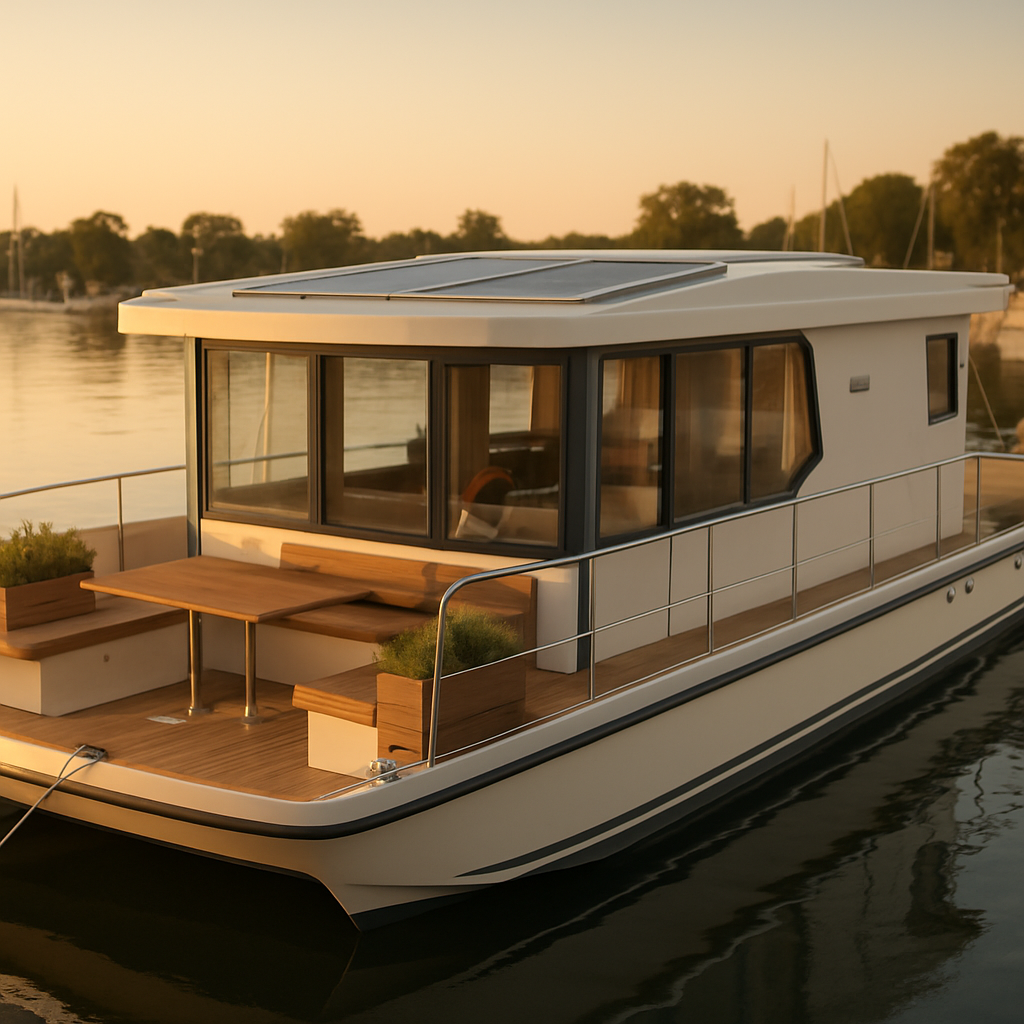
Imagine cruising at dawn on a houseboat that you built yourself—solid, sustainable, and surprisingly affordable. The backbone of that vision? A Recycled Steel Framework. If you’re serious about building a durable, eco-friendly houseboat without breaking the bank, this article walks you through everything you need: why a recycled steel framework matters, how to design and source it, step-by-step construction guidance, and finishing tips that keep your floating home safe and stylish for years.
Why Recycled Steel Framework is a Game-Changer for Homeboat Building
If you’re on the fence about using reclaimed materials, let’s clear things up: a Recycled Steel Framework is not just “good enough”—it’s often the smartest move. Why? Because steel gives you predictable strength, excellent load-bearing capacity, and design flexibility. And when that steel is recycled, you get environmental benefits on top of performance. It’s a win-win for builders who care about resilience and sustainability.
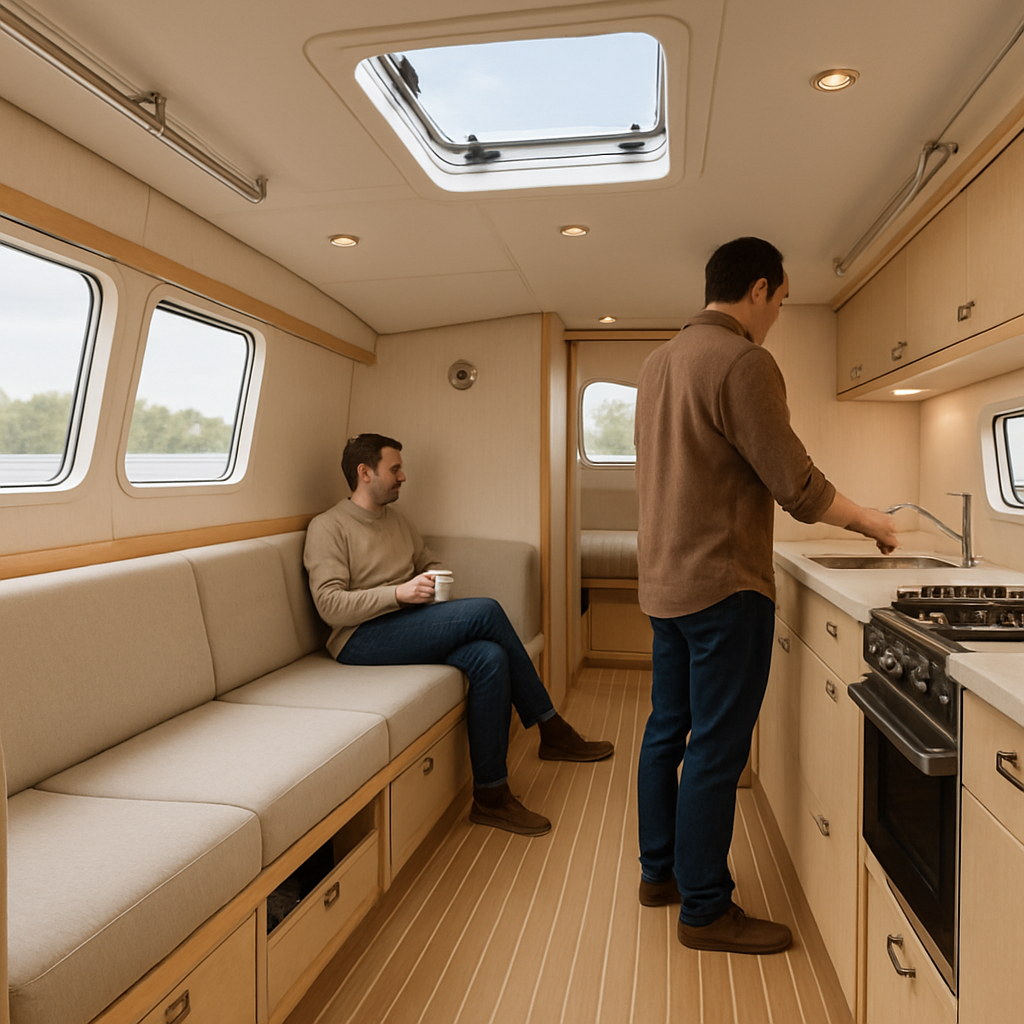
When planning interiors around a Recycled Steel Framework, think beyond structure to finishes that match the sustainability ethos. For example, pairing a robust steel skeleton with lightweight, renewable flooring can keep overall weight down while delivering great looks and comfort; consider Bamboo Flooring Options that are specifically suited to marine or semi-exposed conditions, offering durability, quick installation, and a smaller carbon footprint than many hardwoods. Choosing the right floor can also simplify mounting and vibration isolation when attached to steel substructure.
It helps to take a holistic view of your build materials early in the design stage. Our broader guide to materials explains trade-offs between timber, composites, metals, and insulation—an essential read if you’re balancing weight, corrosion resistance, and interior comfort; check the comprehensive Materials for Houseboats resource to compare options and plan compatible pairings with your Recycled Steel Framework. That resource covers everything from pontoons to interior joinery choices, giving you the context to match steel with suitable companion materials.
Finally, finishing a recycled steel structure calls for safe products that preserve indoor air quality as well as the metal itself. Use sealants and bedding compounds that won’t off-gas toxic solvents in an enclosed living space—see trusted Non Toxic Sealants recommended for marine applications so you can protect seams, joints, and through-bolts without compromising the health of the people aboard. Proper sealant selection also reduces maintenance by preventing moisture ingress around fasteners and welded seams.
Here are the compelling reasons to consider a Recycled Steel Framework for your houseboat:
- High strength-to-weight ratio: steel lets you span wider supports and carry heavier appliances without bulky structure.
- Predictable engineering: reclaimed structural sections like I-beams and hollow sections have well-known properties, which streamlines calculations.
- Sustainability: using recycled steel cuts embodied carbon compared to virgin production, which matters if you care about your build’s footprint.
- Cost-efficiency: when sourced smartly, recycled steel lowers materials cost—letting you spend on better insulation, finishing, or propulsion.
- Adaptability: steel is forgiving in design changes—weld, bolt, cut, or fabricate; it’s a builder’s dream for on-the-fly solutions.
Beyond the technical benefits, there’s a satisfying, rugged aesthetic to an exposed steel framework that says “built to last”—and that’s a vibe many houseboat owners love.
From Salvage to Structure: Designing a Recycled Steel Framework for Your Houseboat
Designing a houseboat around a Recycled Steel Framework is part engineering, part scavenger hunt, and a little bit of creative problem-solving. Start with the big picture and work down into the parts: hull form, payload, usage patterns, and the environment in which you’ll keep the boat.
Start with the use-case and load plan
Ask yourself: Will this be a weekend cruiser or a full-time floating home? How many people? Big appliances? A garage for a tender? These choices determine live loads and critical structural members. For a full-time houseboat, plan for heavier service loads and redundancy.
Choose the right framing topology
Common approaches for a Recycled Steel Framework include:
- Grid deck framing for rectangular barges—simple, strong, and easy to assemble with reclaimed beams.
- Longitudinal girders with transverse frames for hulls—better for hull shaping and hydrodynamic performance.
- Box-frame modules for modular builds that can be assembled on land and joined later—great for transport.
Match reclaimed pieces to structural roles
Not all recycled steel is equal. Wide-flange beams make great primary girders, hollow sections are excellent for columns and torsion resistance, and plate steel is ideal for shear panels and brackets. Keep an inventory of the dimensions and measured properties of the pieces you plan to use. If you can, run basic measurements: cross-section dimensions, thickness, and mass per meter.
Design for corrosion protection and access
One of the weaknesses of older steel is corrosion. Design your Recycled Steel Framework to minimize trapped moisture: avoid closed cavities with no inspection ports, add removable panels, and place drainage paths where water might accumulate. Specify coating systems and include sacrificial anode mounting points if your hull will be in saltwater.
Think about connection details early
Decide between welded and bolted connections up front. Bolts make replacement easier; welds can be stronger and lower-profile. For a DIY builder, combining both—weld where strength is paramount, bolt where future replacement or alignment is likely—often makes sense.
Durability, Weight, and Cost: Evaluating Recycled Steel Frameworks for Houseboats
Choosing a Recycled Steel Framework requires balancing three main factors: durability, weight, and cost. Let’s break each down so you can make informed decisions.
Durability: How long will it last?
Steel lasts if you protect it. But recycled pieces sometimes carry scars—surface rust, small pits, or old welds. That’s not necessarily a deal-breaker. Inspect for section loss (measure thickness), crack history (look for stop-drills and welded patches), and previous overload signs (bends or buckling). Small surface corrosion is usually fixable; deep pitting or repaired cracks are reasons to pass.
Protection strategies for a long-lived Recycled Steel Framework:
- Mechanical prep: grit blasting to near white where possible removes scale and exposes true metal.
- Coatings: zinc-rich primers, epoxies, and durable topcoats protect from moisture and UV.
- Galvanizing: hot-dip galvanizing gives great protection for exposed members if geometry allows.
- Cathodic protection: sacrificial anodes where immersion or spray zones are likely.
Weight: Steel vs. alternatives
Yes, steel is heavier than materials like aluminum or composites. But if used smartly, a Recycled Steel Framework can still be efficient: hollow sections, lattice girders, and plate lightening holes reduce mass while maintaining stiffness. You’ll need to calculate displacement and reserve buoyancy carefully—more steel means more flotation or less payload.
Pro tip: use steel for the primary load paths and keep non-structural elements light. For example, use timber or composite decking and lightweight interior partitions to keep the center of gravity low and maximize livability.
Cost: The true economics of reclaimed steel
Buying recycled steel often saves money on raw material cost, but there are hidden costs to consider:
- Preparation: cutting, straightening, and cleaning take time and money.
- Testing and certification: if your build requires official approval, you may need material tests.
- Surface treatment: blasting and coatings add to expense, but they’re essential.
Net outcome: for many DIY and small-professional builds, the Recycled Steel Framework is still cost-competitive—especially if you have fabrication skills or can barter labor and shop time.
Step-by-Step Guide: Building a Recycled Steel Framework with HomeBoatBuilding.com
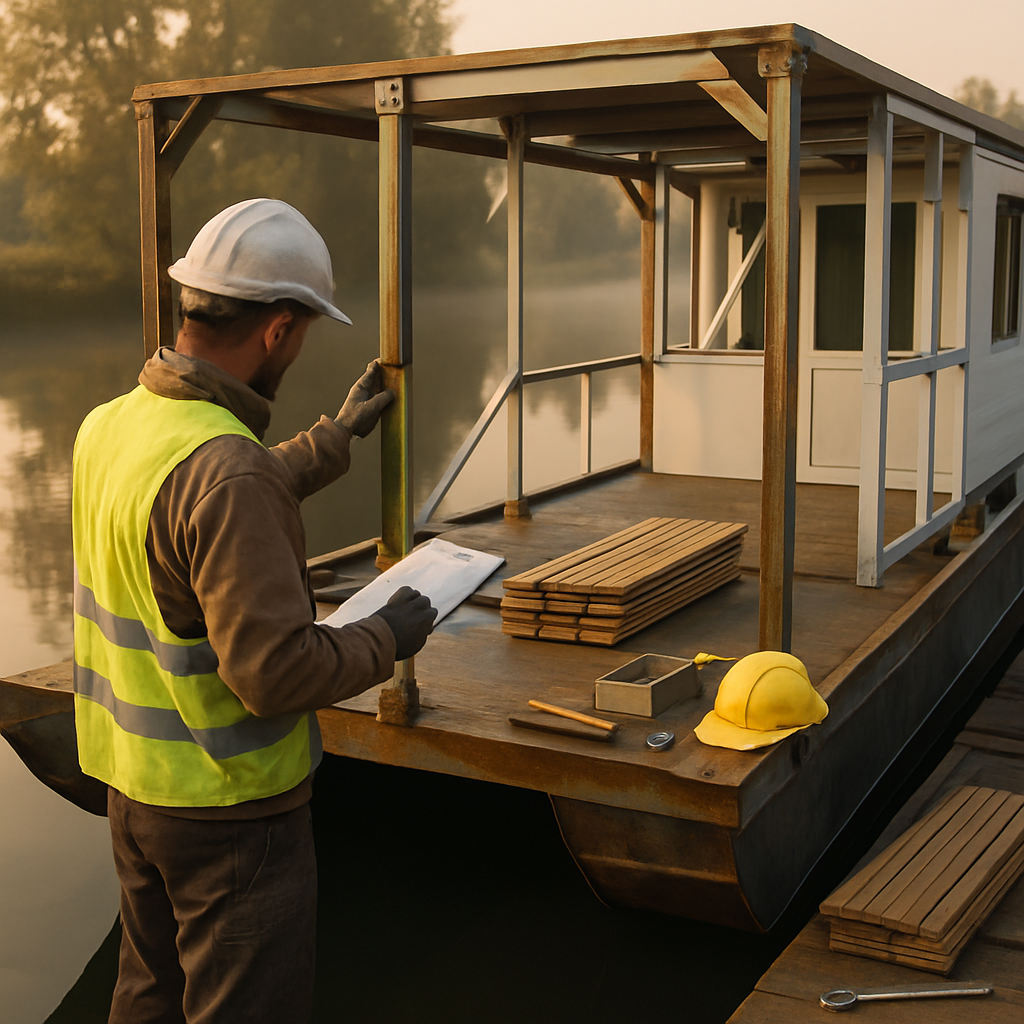
Ready to get your hands dirty? Below is a practical build workflow for a Recycled Steel Framework. It assumes you have basic metalworking skills, a workspace, lifting gear, and access to competent welders when needed. If you’re uncertain about structural calculations, always consult a marine structural engineer for primary members.
Preparation and planning
- Set your build goals: finalize hull type, dimensions, payload, and where you’ll operate (freshwater vs. saltwater).
- Create a materials inventory: list every piece of recycled steel with measurements and condition notes. Tag everything.
- Make a cutting/nesting plan: to minimize waste, lay out cuts and check how pieces can be combined or modified.
- Prep your workspace: level ground, lifting gear (gantry, hoist), welding setup, grinders, and PPE.
Fabrication steps
- Straighten and repair: heat-straighten warped beams and grind away surface scale to check soundness.
- Build jigs: accurate jigs make sure your Recycled Steel Framework goes together true—especially important for long girders.
- Fit primary girders: tack in place, align with levels and laser lines, then install secondary members.
- Weld or bolt: follow consistent welding procedures with appropriate preheat and post-weld cooling if material composition is unknown.
- Drill and install bolted connections where needed—use marine-grade fasteners and anti-seize or appropriate coatings for threads.
Surface protection and assembly
- Blast or mechanically clean the structure where possible. If you can’t blast, use wire wheels and grinders to remove scale and rust.
- Apply a zinc-rich primer, followed by an epoxy mid-coat and a durable polyurethane topcoat for long-term protection.
- Attach flotation modules or pontoons, ensuring watertight connections and sealed through-bolts.
- Add sacrificial anodes in saltwater environments and ensure access for maintenance.
Testing and commissioning
Before you move in, test the structure:
- Conduct dry load tests—apply distributed loads and check deflection against design limits.
- Perform a launch and short sea trial, watching for creaks, unexpected flexing, or leaks.
- Create a maintenance plan: inspect annually, more often in saltwater or after heavy weather.
Materials and Sourcing: Procuring Recycled Steel for Homeboat Frameworks
Finding quality recycled steel is a skill. It’s like shopping for furniture at a flea market with better math: look for good geometry, minimal hidden damage, and sellers who let you inspect before buying.
Best sources for Recycled Steel Framework material
- Industrial salvage yards: best for structural shapes and plate; yard staff often help load heavy items.
- Demolition recoveries: bridges, warehouses, and old factories often yield large beams and plates—but be ready for straightening and testing.
- Marine salvage: items from other vessels may already have marine-grade coatings or compatible alloys.
- Used shipping containers and machinery: good for box sections and plate with minimal cutting complexity.
Practical procurement tips
Don’t buy blind. Take a tape measure, a magnet, and if you can swing it, an ultrasonic thickness gauge. Look for consistent cross section and avoid heavily pitted or patched pieces.
Negotiate by the ton for larger purchases. If you’re building a full-sized houseboat, buying a few tons at once often brings the price per kilo down and could include delivery.
Pro Tips for Finishing a Recycled Steel Framework on Your DIY Houseboat
Finishing is where a Recycled Steel Framework goes from “functional” to “home.” These pro tips help you protect the structure while keeping weight and maintenance manageable.
Edge protection and seam sealing
Cut edges and weld seams are corrosion hotspots. Before assembly, coat exposed edges with a zinc-rich primer and use seam sealers to keep moisture out of joints. Don’t skip small prep tasks—these are the cheapest insurance for long life.
Fastener selection and isolation
Galvanic corrosion is a sneaky enemy when different metals touch. Use isolating washers or sleeves when bolting steel to aluminum pontoons or marine fittings. Choose fasteners carefully—316 stainless for freshwater, and consider duplex stainless or isolated stainless in saltwater, depending on contact metals.
Weight savings without compromise
Remove non-structural plate and introduce lightening holes where stresses are low. Use hollow sections for vertical posts and add lattice bracing to fight torsion without loading up on mass. Keep heavy items low and centered to maintain stability.
Paint and coating systems
Invest in a quality paint system: epoxy primer, epoxy mid-coat, and polyurethane topcoat. The upfront cost is small compared to the savings from avoiding corrosion repairs. Plan a recoating schedule and keep records of each maintenance pass.
Plan for inspection and future repairs
Design removable panels and access ports into boxed sections so you can look inside. Keep a maintenance log with thickness readings and notes. When you spot early corrosion, hit it promptly—early intervention is cheap and effective.
FAQ — Common Questions about Recycled Steel Framework
Is recycled steel safe to use for a houseboat?
Yes — provided Du inspect and test reclaimed sections properly. The key is verifying remaining thickness, checking for structural cracks or prior overload repairs, and ensuring welds are sound. Superficial rust is usually cosmetic, but deep pitting or previous brittle failures are red flags. When in doubt, replace a suspect member rather than gamble on it.
How do I check the condition of recycled steel before buying?
Bring basic tools: a tape measure, magnet (to confirm ferrous metal), and if possible, an ultrasonic thickness gauge. Visually inspect for deep pitting, weld repairs, cracks, or bends. Ask the yard for any material certification or history. For critical members, pay for a lab test or at least a hardness/tensile check — the small upfront cost can prevent major problems later.
Can I weld unknown recycled steel safely?
Often, yes — but treat unknown steels conservatively. Use preheat for thicker components, control heat input to avoid embrittlement, and follow a conservative welding procedure. If a member is structural and the alloy is unknown, have a material test or use a qualified welding procedure for unknown steels. Better yet, use a certified welder for critical welds.
How should I protect a Recycled Steel Framework from corrosion?
Start with thorough surface preparation: blasting to near-white (if possible) or aggressive mechanical cleaning. Apply a zinc-rich primer, epoxy mid-coat, and a high-quality polyurethane topcoat for UV resistance. For exposed components, hot-dip galvanizing is excellent. In saltwater, add sacrificial anodes and design for drainage and inspection access to catch early corrosion.
How often should I inspect the steel frame once the boat is in service?
At minimum, inspect annually. For saltwater exposure, heavy spray zones, or after severe storms, inspect every 6 months. Focus on welds, cut edges, through-bolt areas, and points where dissimilar metals meet. Keep a log of thickness readings, photos, and repair dates to spot trends early.
Will recycled steel make my houseboat too heavy?
Not necessarily. Steel is heavier than aluminum or composites, but smart design reduces weight: use hollow sections, lattice bracing, and lightening holes in non-critical plates. Use steel for primary load paths and keep secondary structures light with timber or composites. Always calculate displacement and reserve buoyancy to ensure Du don’t overload the platform.
Do I need a marine engineer for a Recycled Steel Framework?
For primary load-bearing members and anything affecting flotation or stability, yes — get a marine structural engineer to review your design. For non-critical assemblies and small DIY tweaks, you can often proceed with trusted plans and common-sense checks. But for safety and regulatory compliance, an engineer’s stamp is a smart investment.
How does recycled steel compare financially to new steel or aluminum?
Recycled steel usually reduces raw material costs but adds refurbishment and testing expenses. New steel or aluminum might cost more upfront but require less prep. The sweet spot for recycled steel is when Du have access to good salvage, in-house fabrication skills, or affordable shop time. Overall, reclaimed steel often wins for larger builds or budget-conscious DIYers.
What paint and sealant systems are recommended for interiors and joints?
Use a layered approach: epoxy or zinc-rich primer, epoxy mid-coat, and a durable polyurethane topcoat for exterior exposures. For interior joints and wet areas, choose low-VOC, marine-rated products; refer to trusted Non Toxic Sealants for options that protect air quality and marine joints. Proper seam sealing prevents moisture ingress and reduces corrosion maintenance.
Where should I source reliable recycled steel for a houseboat?
Look to industrial salvage yards, demolition recoveries, marine salvage, and used containers or machinery. Industrial yards often have the best variety of structural shapes, while marine salvage can yield marine-compatible alloys and coatings. Always inspect and, if possible, test before purchase; for larger projects, negotiating by the ton can lower the price and include delivery.
Conclusion
If you want a durable, sustainable, and practical backbone for your houseboat, a Recycled Steel Framework deserves serious consideration. It offers predictable structural performance, environmental benefits, and cost advantages—especially for builders comfortable with metalwork. The keys to success are careful sourcing, thoughtful design for corrosion prevention, and quality fabrication. Do your homework, design with inspection and maintenance in mind, and you’ll end up with a houseboat that’s tough, efficient, and full of character.
Ready to dive in? Start by cataloging available recycled sections, sketching a load plan, and contacting a marine engineer for critical checks. With patience and good prep, your Recycled Steel Framework can be the strong, sustainable spine of a houseboat you’ll be proud to call home.