Homeboatbuilding.com Guide: Marine Grade Plywood for Houseboat Hulls
Imagine stepping aboard a houseboat you built yourself — sturdy, dry, and comfortable — and knowing the hull beneath your feet is made from the right material. That’s where Marine Grade Plywood comes in. It’s affordable, approachable for DIY builders, and when treated properly, can last for decades. If you’re wondering whether marine plywood is the right choice for your project, you’ve landed in the right place. Read on and you’ll know what to buy, how to install it, and how to keep it dry and durable.
Why should you care? Because a bad material choice or sloppy sealing turns weekend projects into constant repairs. Good news: with a little planning and the right techniques, marine-grade plywood gives you a predictable, repairable structure that’s easy to work with. Ready to dive in?
Why marine grade plywood matters for houseboats
Marine Grade Plywood isn’t just a stamp on a sheet — it means higher-quality veneers, fewer core voids, and waterproof adhesives. In practical terms, that translates into panels that resist delamination, take fasteners well, and won’t fall apart after a single season of damp weather. For houseboats — where moisture, splash, and occasional immersion are facts of life — those properties matter. You’ll notice the difference when you’re sealing seams, sanding for paint, or trimming out bulkheads: the faces are smoother, the edges tighter, and the glue lines reliable.
Windows and glazing choices are part of the same long-term thinking that goes into picking Marine Grade Plywood: energy efficiency and condensation control matter aboard a houseboat. If you’re planning fixed windows or larger glazed sections near living areas, consider how Low Emissivity Glass can reduce heat transfer and minimize condensation on cold mornings. Choosing the right glass works hand-in-hand with insulated bulkheads and properly sealed plywood panels to create a more comfortable, low-maintenance home on the water.
When you’re assembling a materials list for a build, it helps to consult a consolidated resource that compares options and trade-offs for boat-specific choices. A single reference like Materials for Houseboats can save hours of research by listing suitable woods, adhesives, insulation, and glazing options. Having that overview early in the project lets you design with the right panels and sealing systems in mind, which reduces surprises during the build and helps you budget for epoxy, cloth, and fasteners upfront.
Finally, the sealants you choose around windows, hatches, and through-hulls affect both longevity and onboard health. For living spaces, selecting Non Toxic Sealants reduces off-gassing, keeps indoor air pleasant, and still provides the flexible, durable joint protection you need. Using low- or non-toxic products where occupants will spend time is an investment in comfort as well as durability; pair those sealants with epoxy edge sealing on plywood and you’ll have a robust, safe build.
Choosing the Right Marine Grade Plywood: Grade, Core, and Thickness (Homeboatbuilding.com)
Choosing Marine Grade Plywood is about balancing cost, weight, and longevity. Let’s break down the key decisions you’ll make: face/back grade, core type, adhesives used, and thickness. Each affects how the plywood will perform on the water.
Face and back grades
Most marine plywood is graded A through D on each face. An “A” face is smooth and nearly knot-free — great if you plan to leave the surface exposed or varnished. A “B” face can have small repairs but is perfectly acceptable under paint or epoxy. For hulls, decks, or any exterior surface where appearance and sealing matter, aim for A/B or even A/A if budget allows. You’ll reduce the time spent filling knotholes and fairing seams.
Core construction
The core makes a huge difference in strength and stability. Typical cores include:
- Plywood (cross-banded veneers): Many thin veneers glued with alternating grain direction. Best overall for hulls and structures where you want predictable bending behavior.
- Laminated (thicker veneers): Slightly lighter laminates can be fine if they have no voids, but they aren’t as forgiving during high-stress bending.
- Sandwich cores (foam or balsa): Used in composite builds where plywood skins are bonded to a lightweight core. Offers great stiffness-to-weight but needs precise layup techniques.
Inspect edges for voids when you buy. A clean, solid edge is a sign of quality; voids under the surface are trouble waiting to happen because they trap moisture and reduce glue strength.
Adhesive and standard
True Marine Grade Plywood uses waterproof adhesives — commonly WBP (Weather and Boil Proof) phenolic resin. Look for recognized standards: BS 1088 is a common benchmark internationally. In the U.S., APA-rated panels with marine specifications are good indicators. If a panel is marketed as “marine” but lacks a standard or seal, ask the supplier questions.
Thickness recommendations
Thickness depends on application, frame spacing, and whether the panel will be fiberglassed or painted. Here’s a practical guide:
| Application | Common thickness | Notes |
|---|---|---|
| Hull planking (single-skin) | 6–12 mm (1/4″–1/2″) | Depends on bay spacing and tabbing; thinner panels need more backing. |
| Decking and walkways | 12–18 mm (1/2″–3/4″) | Consider wear layers or fiberglass overlays for abrasion resistance. |
| Bulkheads and cabinetry | 6–12 mm | Interior faces acceptable if sealed; keep ventilation in mind. |
Don’t skimp on thickness in high-load areas. If in doubt, overbuild slightly or add additional stringers — the hull will thank you.
Waterproofing, Sealing, and Longevity: Marine Grade Plywood on a Houseboat
Even the best Marine Grade Plywood needs protection. Left exposed, wood absorbs moisture, which leads to rot and delamination. But with smart waterproofing systems and attention to seams and edges, you can push a plywood structure to a very long life.
Prepare panels before installation
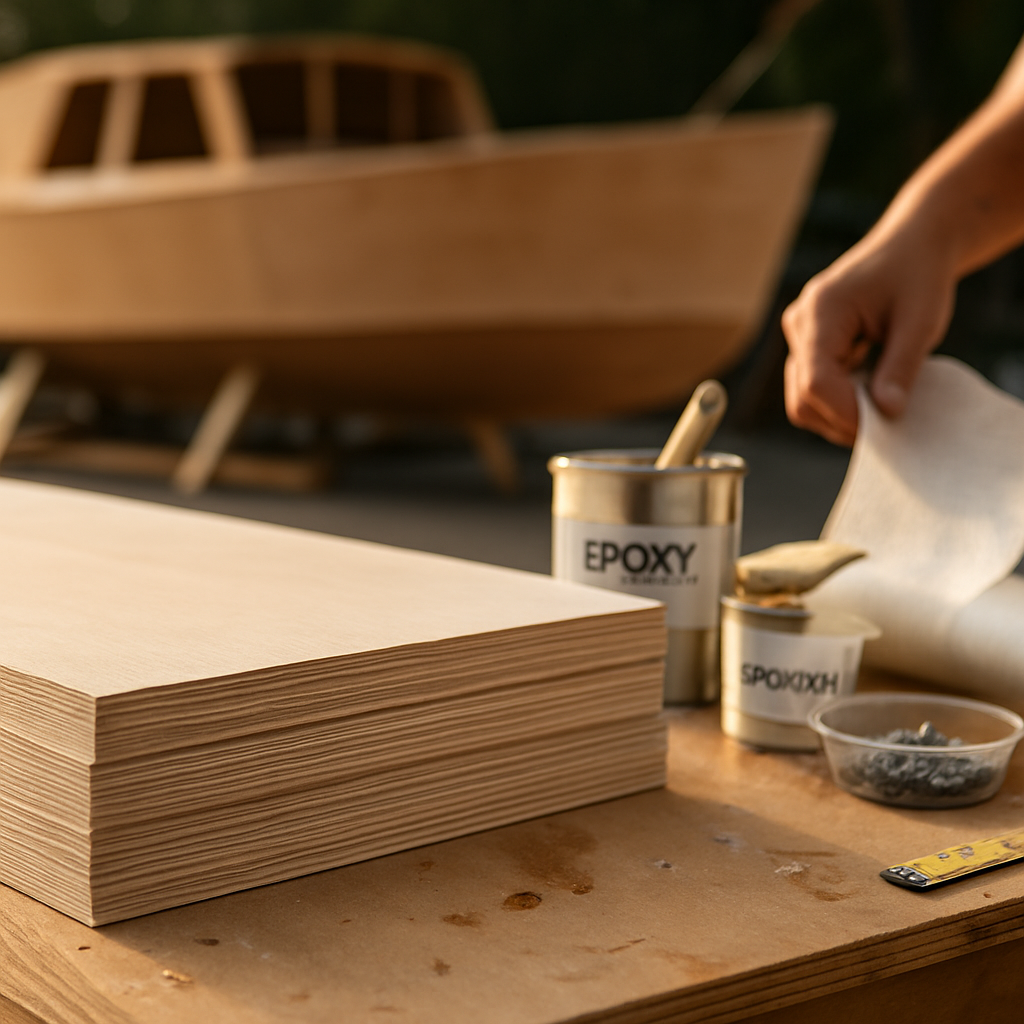
Do some work before the panels even go on the boat. Pre-coat cut edges and both faces with epoxy or a reputable marine sealer. Treating edges first prevents them from acting like sponges during the build. Also, round or chamfer edges slightly — sharp corners collect water and are harder to seal evenly.
Common waterproofing systems
- Epoxy + fiberglass exterior: The gold standard for DIY builders. Saturate fiberglass cloth with epoxy over the plywood to create a tough, continuous barrier. If applied correctly, this system resists abrasion, stops water ingress, and is relatively easy to repair.
- Painted / elastomeric systems: Multiple coats of high-quality marine paint or elastomeric coatings offer good UV and water protection. They’re easier to apply than fiberglass but don’t stand up as well to impact.
- Composite overlays: Bonding composite panels over plywood can add stiffness and protection, particularly on decks or superstructures where insulation and weight savings matter.
In practice, many builders use epoxy + fiberglass on hulls and reserve paint systems for superstructures or interior areas. Epoxy handles moisture best, paint handles UV best, so a combined approach is common: epoxy primer, fair, then paint the final finish.
Sealing seams and fastener holes
Seams and screw holes are the usual suspects in failures. Don’t let them be yours. Best practices include:
- Use epoxy fillets and fiberglass tabbing across seams for a structural, watertight bond.
- Seal fastener holes with epoxy or a marine-grade sealant before final coating. Countersink and cover screws for a smooth finish.
- Choose flexible sealants (polyurethane, polysulfide) where movement occurs, like between hull and deck.
Installation Essentials: Fasteners, Seams, and Finishes for Marine Grade Plywood
Installation technique matters. The same Marine Grade Plywood, installed differently, can either last decades or fail in a few seasons. Let’s get into the nuts and bolts — literally.
Fasteners and hardware
Corrosion is sneaky. Use fasteners that won’t corrode and stain the wood or weaken the structure.
- Material: Stainless steel 316 is the common go-to. Silicon bronze is excellent where you want top corrosion resistance and don’t mind the cost.
- Screw type: Cooperate with the wood: ring-shank or coarse-thread marine screws resist pull-out better than smooth nails. Self-tapping fasteners designed for marine plywood also work well.
- Spacing: Follow your plan, but typical edge spacing for hull planking is 4–8 inches. For decking, follow load and span calculations.
Seams and joint methods
How you join panels affects strength and water tightness. The main methods:
- Scarf joints: Use these for end-to-end joins. The long bonding area spreads loads and reduces stress concentrations.
- Butt blocks: Easier for beginners, but you must epoxy, fillet, and tab properly to avoid weak spots.
- Tabbing: Apply fiberglass tape over seams using epoxy to create a continuous skin. It’s one of the best ways to make plywood act like a monocoque shell.
Finishes
Finish has to protect and look good. The recommended stack:
- Epoxy saturation / barrier coat
- Primer compatible with epoxy
- UV-resistant topcoat (marine paint or varnish)
For decks, add non-skid using aggregate or bonded non-skid sheets. Use epoxy-based fairing compounds when you need to smooth surfaces before painting.
Maintenance and Care: Keeping Marine Grade Plywood Dry and Durable on Your Houseboat
The work isn’t finished when the last coat of paint dries. Maintenance is what keeps your Marine Grade Plywood doing its job for years. The good news? It’s straightforward work if you stick to a schedule.
Routine inspection checklist
- Look for soft spots, blistering, or paint cracks — these often mean water’s getting in.
- Check fasteners for corrosion and tighten or replace as needed.
- Inspect edges, under decks, and around through-hull fittings — they’re common trouble spots.
Seasonal maintenance
Each season, do a targeted checklist: touch up paint and varnish, reseal through-hulls and hatches, and verify ventilation systems. If your boat sits idle in winter, consider extra dehumidification or ventilation to avoid condensation on bulkheads.
Repairing damage
Small problems are fixable. Cut out rotten spots, dry the cavity, scarf in new plywood, epoxy-bond and tab, then fair and paint. For larger core rot or delamination, you’ll likely replace whole panel sections. Always fix the source of water before cosmetic repairs — otherwise, you’ll be doing the same job again soon.
Alternatives and Practical Tips: When Marine Grade Plywood Fits Your Design (Homeboatbuilding.com)
Marine Grade Plywood is versatile, but it’s not the only route. Let’s look at alternatives and when to favor plywood over other materials.
Viable alternatives
- Cold-molded / strip-planked wood: Many thin veneers laminated together with epoxy create beautiful, strong hulls. More labor-intensive, but long-lived when sealed properly.
- Composite sandwich panels: Foam or balsa cores between veneer skins give excellent stiffness and insulation at higher cost.
- Aluminum: Tough and low maintenance, but requires metalworking skills and different joinery techniques.
- Fiberglass (GRP): A monocoque fiberglass hull is low maintenance and durable, but molds or factory processes are costly for one-off builds.
When to pick Marine Grade Plywood
Choose Marine Grade Plywood when you want:
- A reasonable material cost that’s still durable.
- Ease of shaping and fastener use — plywood loves screws and glue.
- DIY-friendly construction where carpentry skills shine.
- Flexibility to epoxy/fiberglass later for added protection.
If you need minimal maintenance and don’t mind spending more, metal or full GRP might be better. But for many homebuilders, plywood hits the sweet spot.
Practical buying and handling tips
- Buy from reputable marine suppliers — inspect edges for voids and confirm standards.
- Store panels flat, off the ground, and under cover. Even marine plywood will absorb moisture if left exposed.
- Pre-seal cut edges before exposure. Those raw edges are the fastest route for water uptake.
- Plan panel runs to minimize butt joints in high-stress areas; scarf joints are worth the extra work.
- Budget for epoxy, fiberglass cloth, and extra fasteners — these often increase material costs by 20–40% for a proper encapsulation.
Quick Reference: Material Selection and Installation Checklist
| Item | Recommended choice | Why |
|---|---|---|
| Panel grade | A/B or B/B Marine Grade Plywood | Fewer defects; easier to seal and finish |
| Core | Cross-banded veneer ply core | Predictable strength and bending behavior |
| Adhesive | Epoxy for bonding; WBP phenolic for factory bonds | Waterproofing and longevity |
| Fasteners | Stainless 316 screws (ring-shank) | Corrosion resistance and holding power |
| Exterior finish | Epoxy + primer + UV-resistant topcoat | Best moisture barrier and long-term protection |
Frequently Asked Questions (FAQ) — Marine Grade Plywood
Below are the common questions people search for about Marine Grade Plywood and clear, practical answers you can use when planning or building a houseboat. These reflect what DIY builders, inspectors, and owners often ask and are useful for quick decisions during a project.
What exactly is Marine Grade Plywood and how is it different from exterior plywood?
Marine Grade Plywood is made from higher-quality veneers with minimal defects and is bonded with waterproof adhesives (usually WBP phenolic). Unlike general exterior plywood, it’s manufactured to reduce core voids and delamination risks. For you building a houseboat, that means panels that hold screws better, fair smoother under coatings, and provide a more reliable base for epoxy encapsulation. It’s not magically rot-proof, but it gives you a much better starting point than standard exterior plywood.
Is Marine Grade Plywood fully waterproof and safe to use in a hull that may get wet?
Marine Grade Plywood is not inherently fully waterproof — the adhesive and veneer quality are superior, but wood still absorbs water. To make it watertight, you must seal it: epoxy encapsulation, fiberglass overlays, and careful sealing of edges and fasteners. When sealed properly, marine plywood performs excellently in hulls and decks; left unsealed or poorly sealed, it will absorb moisture and degrade. Think of the plywood as highly water-resistant once treated, not as a waterproof substitute for proper sealing.
What thickness of Marine Grade Plywood should I use for my houseboat hull and deck?
Thickness depends on panel role and support spacing. Typical guidance: hull planking often uses 6–12 mm (1/4″–1/2″) depending on frame bay spacing and tabbing; decks generally use 12–18 mm (1/2″–3/4″) to handle foot traffic and localized loads. If you plan to fiberglass over panels, you can sometimes use thinner stock with closer framing or more tabbing. When in doubt, go a bit thicker in high-load zones — you can always fair and trim, but fixing a weak hull section is a much bigger job.
How should I seal and waterproof the plywood to ensure long life on a houseboat?
The best practice is epoxy sealing: pre-coat all faces and cut edges with epoxy, use epoxy fillets and fiberglass tabbing over seams, then apply a barrier coat and UV-protective topcoat. For less intensive builds, multiple coats of high-quality marine paint and flexible sealants on joints can work, but epoxy + fiberglass gives the best protection. Always pre-seal fresh cuts and fastener holes and use compatible primers/topcoats for UV resistance.
What fasteners and adhesives should I use with Marine Grade Plywood?
Use corrosion-resistant hardware: stainless steel 316 or silicon bronze fasteners. Ring-shank or coarse-thread marine screws resist pull-out better than nails. For adhesives, factory bonds use WBP phenolic, but for onsite bonding, epoxy is the preferred choice — it’s waterproof, bonds strongly, and works with fiberglass tabbing. Use marine-grade sealants (polyurethane or polysulfide) for flexible joints where movement is expected.
How long can I expect Marine Grade Plywood to last on a houseboat?
Lifespan depends on sealing quality and maintenance. Properly epoxy-encapsulated panels with good ventilation and routine inspections can last decades — 20+ years is achievable. Panels left improperly sealed or with recurring moisture intrusion may fail in a few years. Regular maintenance (touch-ups, checking fasteners, resealing joints) is what turns a good initial build into a long-lived vessel.
Can I repair small areas of rot or delamination, or do I need full panel replacement?
Small, localized rot or delamination is repairable: remove damaged material, dry the area, scarf in new plywood or patch with an epoxy-supported sleeve, tab and fair, then repaint. For extensive core rot or multilayer delamination, replacing the entire panel section is safer. Always locate and fix the moisture source before finishing repairs to avoid recurring problems.
Are there low-VOC or non-toxic products I should consider around living spaces?
Yes — for interiors and living spaces, choose low-VOC paints, non-toxic sealants, and ventilation-friendly materials. Non-toxic sealants reduce off-gassing and improve air quality; using them around living spaces, hatches, and windows is smart. Pair these products with proper sealing and epoxy on structural areas to balance health and durability.
When is Marine Grade Plywood not the best option?
If you want a near-zero maintenance hull over many decades and budget isn’t a constraint, alternatives like aluminum or a full GRP (fiberglass) hull may be better. Sandwich composites offer excellent stiffness-to-weight for performance builds. However, for DIY-friendly, cost-effective, and repairable construction, marine plywood often wins for small to medium houseboats.
Where should I buy Marine Grade Plywood and how should I inspect it on delivery?
Buy from reputable marine suppliers or lumber yards that explicitly stock marine-standard panels. Inspect edges for voids, check face grades (A/B recommended), confirm the WBP or equivalent adhesive marking, and look for any delamination or warp. Store panels flat, off the ground, and under cover. If you spot significant edge voids or visible core defects, reject the sheet — fixing poor-quality panels costs more in time than paying a little extra up front.
Final Practical Tips for Homeboatbuilders
Want the short, honest advice? Start with good panels, seal everything, and inspect regularly. Spend the time to pre-seal edges, use epoxy and tabbing where structure matters, and don’t cut corners on fasteners. If a joint looks like it might flex, assume it will — and design a backing or tabbing to pick up that load.
And if you ever feel stuck: ask. Boatbuilding communities, forums, and local yards are full of folks who made the same mistakes and are happy to share shortcuts. Building a houseboat with Marine Grade Plywood is a manageable, rewarding project — just treat the wood with respect, and it will return the favor.
Summary
Marine Grade Plywood is a practical, cost-effective choice for many houseboat projects. It gives you workability, strength, and — with proper sealing and maintenance — the longevity to enjoy your boat for years. Pick the right grade, pre-seal and fiberglass where needed, use corrosion-resistant hardware, and keep up with basic maintenance. Do that, and you’ll have a hull that’s solid, repairable, and something you can be proud of.