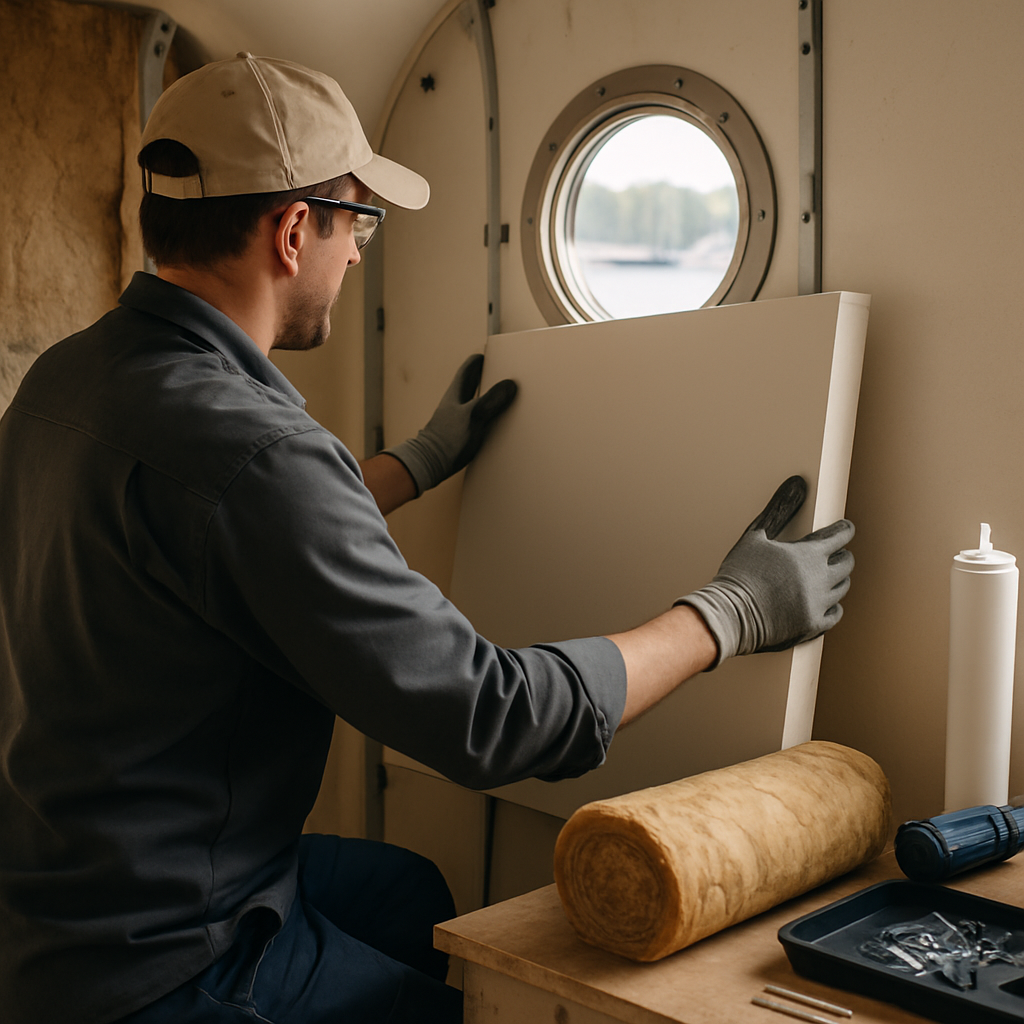
Insulation Installation Methods for Houseboats: Best Practices
Insulation Installation Methods for houseboats isn’t the same as insulating a suburban bungalow. Floating homes live in a wetter, saltier, and often tighter environment. That means you’ve got to think about moisture, corrosion, fire safety, and limited space—all at once. If you’re planning a retrofit or building from scratch, this guide gives you the practical, real-world steps and choices that actually work on the water. You’ll get clear direction on materials, installation techniques, vapor control, soundproofing, and safety—written so you can follow along with a wrench in one hand and a cold beverage in the other. Let’s dive into the practical methods and solutions now.
Before you start cutting into bulkheads, take time to study proper routing and penetrations—check resources on Electrical System Routing so you understand safe cable runs and how to avoid compromising insulation or creating moisture paths; improper routing undermines any insulation strategy. Also review broader Houseboat Construction Techniques for framing, fastening, and planning service access that supports long-term insulation performance. Finally, consult proven Hull Sealing Techniques, because a watertight hull and well-sealed joints are the foundation of any successful insulation installation and will save you time and money by preventing leaks, shorts, and rot.
Choosing Moisture-Resistant Insulation Materials for Afloat Homes
First things first: pick materials that won’t turn into a mushy, moldy mess after a season at the dock. Moisture resistance should be your number one filter when comparing products. Here’s a quick, side-by-side look at the common options so you can make choices that last.
| Material | Moisture Behavior | Typical R-value | Best Uses on Houseboats |
|---|---|---|---|
| Closed-cell spray foam | Resists water; acts as vapor retarder | ~6–7 per inch | Irregular voids, thin cavities, airtight seals |
| Extruded polystyrene (XPS) | Low water absorption | ~4.5–5 | Continuous insulation on bulkheads, under cabinetry |
| Polyiso (foil-faced) | Good if sealed; face protects core | ~6–6.5 | High R where space is tight; use with edge sealing |
| Mineral wool (stone wool) | Doesn’t support mold; may hold small amounts but sheds | ~3–3.3 | Soundproofing, fire zones, engine rooms (with proper barriers) |
| Fiberglass batts | Absorbs moisture; loses R-value | ~2.5–3.5 | Only in fully dry, encapsulated cavities—generally not recommended |
Quick takeaway: if you want long-term, low-maintenance insulation Installation Methods, lean heavily on closed-cell spray foam and rigid boards (XPS or polyiso) for wet-prone areas, and bring mineral wool in where you need fire resistance and acoustic damping.
Step-by-Step Guide to Installing Wall and Ceiling Insulation on a Houseboat
Ready to get your hands dirty? Below is a practical step-by-step approach to insulating walls and ceilings on a houseboat. Follow these Insulation Installation Methods in order and you’ll avoid the most common headaches.
- Assess and dry out: Before any insulation goes in, check for leaks, rot, or salt corrosion. Don’t just patch—find the source. Replace any compromised wood or corroded metal. Insulation over rotten framing is a recipe for failure.
- Plan your moisture strategy: Decide whether closed-cell foam, continuous rigid board, or a smart vapor retarder best suits your climate and hull design. This decision drives the rest of your installation choices.
- Measure cavity depth and obstacles: Note wires, pipes, and ducts. Measure carefully so you don’t compress insulation—compressed batts lose R-value fast.
- Install continuous insulation where feasible: Apply rigid board to the warm side of hull or bulkheads to reduce thermal bridging. Seal seams with compatible tape or sealant.
- Fit cavity insulation: For mineral wool or batts—cut to size and place snugly. For spray foam—apply in thin layers. For rigid pieces—adhere and mechanically fasten with corrosion-resistant screws and washers.
- Air-seal penetrations: Use low-expansion canned foam, marine-grade sealants, or butyl tapes around cable, plumbing and fasteners. Air leaks are the biggest moisture carriers.
- Install vapor control as required: In cold climates, use warm-side vapor retarders. In warm-humid climates, be cautious with impermeable barriers—closed-cell foam can act as both insulation and vapor control.
- Support overhead insulation: Use netting, spring wires, or strapping to keep ceiling insulation in place. No one wants batts sagging into the cabin.
- Reinstall finishes and seal seams: Use marine-grade caulk around joints and ensure interior panels are fixed with stainless or coated fasteners.
- Test and monitor: After everything’s back in place, monitor humidity and check for condensation over the next few weeks. Make adjustments if needed.
Practical tips for ceilings
Ceilings are shallow and exposed to temperature swings—especially on lake-houseboats and in colder regions like the Pacific Northwest. If cavity depth is minimal, closed-cell spray foam or foil-faced polyiso above the ceiling surface is often the most effective. And remember: install light fixtures and bulkhead-mounted vents before filling cavities—retrofits are messier than they look.
Soundproofing and Thermal Efficiency: Insulation Techniques for Houseboats
Houseboats don’t just need to be warm—they need to be pleasant. Engines, generators, slapping water, nearby boats, and late-night dock noise can ruin serenity. The good news? Soundproofing and thermal insulation often go hand in hand.
- Use absorptive materials: Mineral wool helps both thermal and acoustic control. It’s heavy, but that’s part of its charm—it dampens sound and resists heat.
- Add mass: Extra layers of marine plywood or composite sheathing slow sound transmission and help with thermal inertia. A heavier wall feels warmer and quieter.
- Decouple surfaces: Use resilient channels or isolation clips to keep interior panels from vibrating with the hull—this cuts structure-borne noise dramatically.
- Seal the small stuff: Gaps and seams leak both heat and sound. Use acoustic sealant around doors, windows, and service penetrations.
- Think in systems: Soundproof the engine room with insulated enclosures and use insulated hoses and mounts to reduce transmitted vibration.
Vapor Barriers and Air Sealing: Essential Steps in Houseboat Insulation
Vapor control and airtightness are the twin pillars of durable Insulation Installation Methods on a houseboat. Get these wrong and you’ll be chasing condensation, rot, and mold like a dog chasing its tail.
Key principles
– Fix bulk water and leaks before insulating.
– Prioritize airtightness—air leakage moves more moisture than vapor diffusion.
– Match vapor control to your climate. What works in Seattle may fail in Florida.
Recommended approaches by climate
- Cold climates (northern lakes, sheltered bays): Use a warm-side vapor retarder like a smart membrane or poly, combined with continuous exterior insulation to keep cold surfaces from forming inside cavities.
- Warm-humid climates (tropical marinas, southern coasts): Avoid placing impermeable vapor barriers on the warm interior side. Instead, use closed-cell foam or sealed rigid boards that keep moisture out of cavities and allow assemblies to dry outward if needed.
- Mixed climates: Smart vapor retarders that change permeability with humidity can be a good compromise. Closed-cell foam is also a reliable universal choice, though it requires attention to fire barriers.
And one more thing: ventilation. Tight shells are efficient but need controlled ventilation. Install mechanical ventilation or a dehumidifier if you’ve tightened up the boat without natural drafts.
Safety Considerations: Fire-Rated Insulation for Marine Environments
Safety isn’t negotiable. On a houseboat, fire spreads fast and smoke kills. Choose Insulation Installation Methods that reduce flame spread and combine them with proper barriers and alarms.
Materials with fire performance
- Mineral wool: Non-combustible and excellent around engines and stove flues.
- Fire-rated rigid boards: Some polyiso boards offer better fire performance—check manufacturer specs and marine approvals.
- Closed-cell spray foam: Often combustible when exposed; most formulations require an ignition/thermal barrier like 1/2″ gypsum or approved coatings if left exposed.
Installation safety tips
- Maintain required clearances around exhausts and burners. A few inches matter. Really.
- Use intumescent coatings or marine fireboard to protect combustible insulation near heat sources.
- Install marine-rated smoke and CO detectors, and place them logically—near sleeping areas and enclosed engine rooms.
- Choose sealants and adhesives that are low-VOC and marine-rated to minimize toxic fumes in case of a fire.
- Use corrosion-resistant fasteners and hardware; rust can create weak points that lead to failures later on.
Common Mistakes to Avoid When Insulating Your Houseboat
You learn more from mistakes than successes—sometimes the hard way. Here are common traps and how to dodge them.
- Skipping air sealing: If you insulate but don’t seal, you’ll still lose heat and invite moisture. Seal first, insulate second.
- Using fiberglass in wet cavities: Fiberglass is cheap, but it loves water. If it gets wet, it becomes useless and unhealthy.
- Compressing insulation: Pushing a thicker batt into a shallow cavity reduces its R-value. Fit materials to cavity size or use a higher-R product.
- Blindly installing vapor barriers: A vapor barrier in the wrong climate can trap moisture. Understand your local conditions.
- Neglecting access: Don’t seal everything permanently. Leave inspection hatches—especially around tanks, pumps, and bilges.
- Forgetting corrosion control: Use stainless or coated screws; salty air plus trapped moisture equals fast failure.
Maintenance, Inspection, and Troubleshooting
Insulation isn’t set-and-forget on a floating home. A little attention pays off. Here’s how to keep the system healthy over the years.
- Inspect yearly: Open hatch panels and check for damp spots, discoloration, or mildew. Do this after major storms or winter storage too.
- Check plumbing and bilges: Ensure through-hulls, pumps, and plumbing fittings are dry and leak-free—most wet insulation problems start here.
- Replace, don’t dry: If insulation has been soaked, remove and replace it. Drying in place rarely removes salt or contaminants fully.
- Monitor humidity: Aim for interior relative humidity below 60%. Use dehumidifiers if necessary—especially in humid marinas.
- Address odor and mold early: If you detect musty smells, find the source. Early remediation is far cheaper and less invasive than extensive rebuilding.
Quick Installation Checklist
- Repair leaks and structural rot before insulating.
- Choose moisture-resistant materials appropriate to your climate.
- Air-seal all penetrations and seams.
- Install insulation without compression; support ceiling insulation.
- Apply vapor control strategy suitable for your region.
- Protect combustible insulation with approved barriers.
- Leave inspection access and test humidity after installation.
Final Thoughts
Insulation Installation Methods on houseboats require a mindset shift: you’re dealing with movement, moisture, and marine-specific hazards. Prioritize moisture control, airtightness, and fire safety. For many projects, closed-cell spray foam or sealed rigid boards offer the best combination of R-value and moisture resistance. Mineral wool earns its keep where fire resistance and acoustic comfort matter. Whatever route you take, plan for future inspection, pick the right fasteners, and match your vapor strategy to your local climate. Do these things, and your houseboat will be cozy, quiet, and resilient for seasons to come.
Frequently Asked Questions
Q: What is the best insulation for a houseboat?
If you ask me, closed-cell spray foam and sealed rigid boards (XPS or foil-faced polyiso) are the best overall choices for most houseboats because they resist moisture, provide strong air-sealing, and deliver a high R-value per inch. Mineral wool is a great companion where you need fire resistance and acoustic damping. Use fiberglass only in fully dry, well-encapsulated cavities—otherwise it’s asking for trouble.
Q: How do you prevent moisture and mold in houseboat insulation?
Start with watertight hulls and good routine maintenance—most wet-insulation problems come from leaks, plumbing failures, or poor bilge management. Prioritize airtight sealing of penetrations and seams, choose moisture-resistant products like closed-cell foam, and ensure assemblies can dry to at least one side. Monitor interior humidity and use ventilation or dehumidifiers when needed; tackle any musty smell immediately.
Q: Is spray foam safe to use on a houseboat?
Spray foam is effective but requires care. Closed-cell foam provides vapor control and structural adhesion, yet many formulations must be covered with an ignition/thermal barrier (e.g., 1/2″ gypsum or an approved marine fireboard) if left exposed. Follow manufacturer instructions, wear PPE during application, and keep foam away from required clearances around exhausts and engines unless protected by a fire-rated barrier.
Q: Do I need a vapor barrier on my houseboat?
It depends on climate. In cold climates, a warm-side vapor retarder helps keep interior moisture from condensing in cold cavities. In warm-humid locations, impermeable vapor barriers can trap moisture and make things worse. If you’re unsure, consider a smart vapor retarder or closed-cell foam that performs as both insulator and vapor control, and design ventilation paths so assemblies can dry if needed.
Q: Can I use fiberglass batts inside a houseboat?
Fiberglass can work in strictly dry, encapsulated spaces, but it’s generally not recommended for exposed marine cavities because it absorbs water and loses R-value. If you opt for fiberglass, ensure perfect air-sealing, impermeable encapsulation, and easy access for inspection—otherwise choose more moisture-tolerant options.
Q: How thick should insulation be on a houseboat?
Match insulation thickness to cavity depth without compressing the material. If space is limited, use higher-R materials (polyiso or closed-cell foam) rather than overstuffing lower-R batts. Continuous exterior insulation can also boost performance without altering internal cavity thickness—handy where headroom is precious.
Q: How do I insulate around electrical and plumbing penetrations?
Seal around cables, pipes, and conduit with low-expansion canned foam, marine-grade butyl tape, or compatible sealants. Route electrical runs thoughtfully—refer to good practices for electrical system routing so you don’t create thermal or moisture bridges. Always maintain service access where practical and use corrosion-resistant fasteners to avoid future headaches.
Q: What’s the best way to soundproof a houseboat?
Use absorptive layers like mineral wool, add mass (extra plywood or composite sheathing), and decouple interior panels with resilient channels or isolation clips. Seal gaps and use acoustic sealants around doors and windows. For engine rooms, build insulated enclosures and isolate mounts to reduce vibration transmission.
Q: How often should I inspect insulation on my houseboat?
Inspect annually at a minimum, and after major storms or winter storage. Open access panels and check for dampness, discoloration, or mildew. Check bilges and through-hulls too—those are common sources of problems. Replace wet insulation rather than trying to dry it in place.
Q: What are the most common installation mistakes to avoid?
Don’t skip air sealing; don’t compress insulation; don’t blindly apply vapor barriers without considering climate; and don’t use moisture-absorbing materials in wet-prone spaces. Also, leave access panels and use corrosion-resistant fasteners—small oversights now become big—and expensive—repairs later.